 Missions
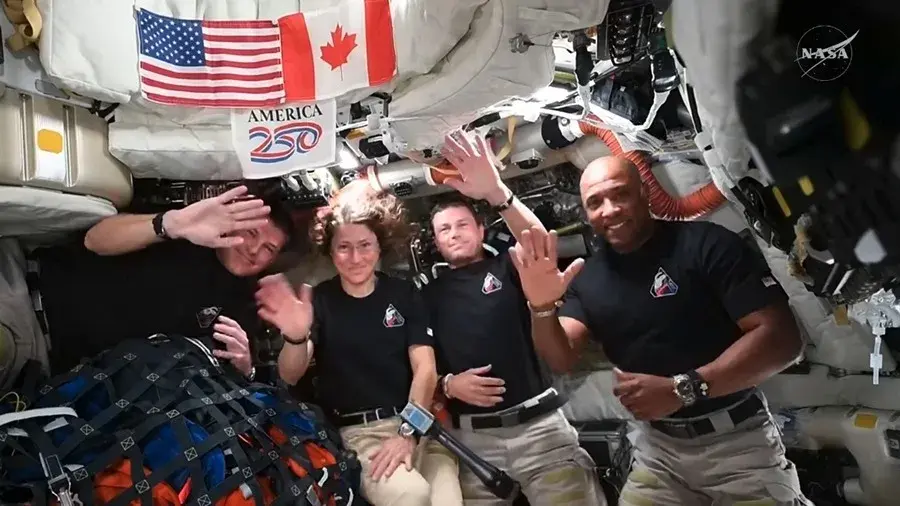
How Astronauts Slept, Ate and Survived Inside Orion During Artemis II
What does daily life look like when four astronauts leave low Earth orbit and head around the Moon? With NASA’s Artemis II now completed after launchi…
Read more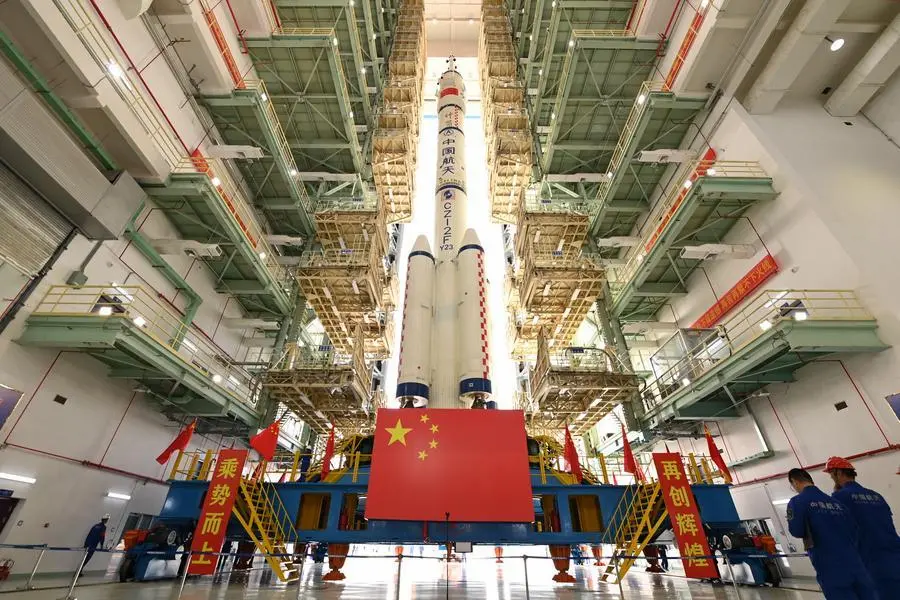
China has launched the Shenzhou-23 crewed mission to the Tiangong space station, and the headline detail is hard to miss: one of the three astronauts is planned to remain in orbit for about a year. That would make it China’s first attempt at a year-long human spaceflight, a major step beyond the roughly six-month rhythm that has defined its recent station missions.
The spacecraft lifted off on Sunday night, 24 May 2026, from the Jiuquan Satellite Launch Center in northwestern China aboard a Long March 2F rocket, with docking at Tiangong next on the mission timeline. For anyone wondering why this launch matters beyond another routine crew rotation, the answer lies in what a full year in space can reveal. How do people cope, physically and operationally, when a mission stretches far beyond the now-familiar half-year stay?
The three-person crew consists of Zhu Yangzhu, the commander, alongside Zhang Zhiyuan and Lai Ka-ying, who Chinese authorities also identified as Li Jiaying using the Mandarin transliteration of her name. Lai, born and raised in Hong Kong and holding a doctorate in computer forensics, became the first astronaut from the city to fly on a space mission.
According to Chinese state media, one member of the Shenzhou-23 crew is scheduled to stay aboard Tiangong for a full year in order to explore human adaptability and performance limits in long-duration spaceflight. The other two astronauts are expected to follow the more typical cadence and rotate out after about six months, as part of an in-orbit handover with the crew of Shenzhou 21, who had already spent more than 200 days on the station.

That staggered approach says a great deal about where China’s human spaceflight programme is heading. Tiangong has hosted Chinese crews since 2021, and the country has steadily built up a system of repeated expeditions, regular crew rotations and sustained station operations. Extending one astronaut’s stay from months to a year is not just an endurance exercise; it is a test of the station’s reliability, logistics and day-to-day operational maturity.
The Shenzhou-23 crew is also due to carry out dozens of science and application projects. The source material does not lay out each investigation in detail, but the broad goals are clear: experiments, station work and the kind of long-duration mission experience that becomes indispensable once a programme starts thinking beyond low-Earth orbit.
| Mission detail | Shenzhou-23 |
|---|---|
| Launch date | 24 May 2026, Sunday night |
| Launch site | Jiuquan Satellite Launch Center |
| Launch vehicle | Long March 2F |
| Destination | Tiangong space station |
| Crew | Zhu Yangzhu, Zhang Zhiyuan, Lai Ka-ying (Li Jiaying) |
| Planned long stay | One astronaut for about one year |
A year in orbit would not be unprecedented globally. Other space programmes have already crossed that threshold, including missions by Scott Kelly and Mikhail Kornienko, Christina Koch, Frank Rubio and, further back, Valeri Polyakov. But that is precisely why Shenzhou-23 stands out: this is China moving into a category of spaceflight experience that only a handful of programmes have reached.
There is a subtle but important difference between operating a station and using it to stretch human spaceflight limits. Tiangong has already proved that China can sustain crews in orbit; Shenzhou-23 is about showing it can do so for longer, while collecting its own biomedical and operational data rather than relying on lessons generated elsewhere.
The context matters here. China developed Tiangong after being effectively excluded from the International Space Station over United States national security concerns. In that light, every additional layer of capability on Tiangong carries strategic weight. As the International Space Station moves closer to retirement, China’s station increasingly looks like more than a national laboratory. It is becoming a long-term platform for continuous human presence in low-Earth orbit.

The launch also came as China continues to target its first crewed Moon landing by 2030. That does not mean Shenzhou-23 is a lunar mission in disguise; it is firmly a Tiangong expedition. But the connection is straightforward. Longer stays in space sharpen experience in crew health, station maintenance, operational planning and the disciplined routine required for complex missions far from Earth.
Even the crew rotation planned for this flight reflects that growing sophistication. China is not simply sending astronauts up and bringing them home on a fixed timetable; it is experimenting with overlapping stays and different mission lengths inside the same operational framework. That sort of flexibility becomes increasingly valuable as ambitions expand.
There is also a recent reminder that human spaceflight programmes are measured not only by milestones but by resilience. Last year, an emergency mission in the Shenzhou programme returned astronauts who had been stranded on Tiangong because of a damaged spacecraft. Against that backdrop, Shenzhou-23 looks like another sign of a programme pressing ahead, refining its systems and broadening its reach.
For now, the most consequential part of the mission remains ahead. If the planned year-long stay proceeds as intended, Shenzhou-23 will not rewrite the history of long-duration spaceflight worldwide. What it will do is show that China is entering that demanding arena on its own terms, with Tiangong as both proving ground and springboard.
MissionsWhat does daily life look like when four astronauts leave low Earth orbit and head around the Moon? With NASA’s Artemis II now completed after launchi…
Read more Missions
NASA has now offered its clearest public sketch yet of Artemis III, and the headline is a major shift: this mission is currently being shaped as a cre…
Read more Missions
NASA’s Artemis campaign has moved the story of lunar exploration into a new phase. After Artemis II carried astronauts around the Moon as the first cr…
Read more