 Missions
Shenzhou-23 marks China’s first planned year in orbit
China has launched the Shenzhou-23 crewed mission to the Tiangong space station, and the headline detail is hard to miss: one of the three astronauts …
Read more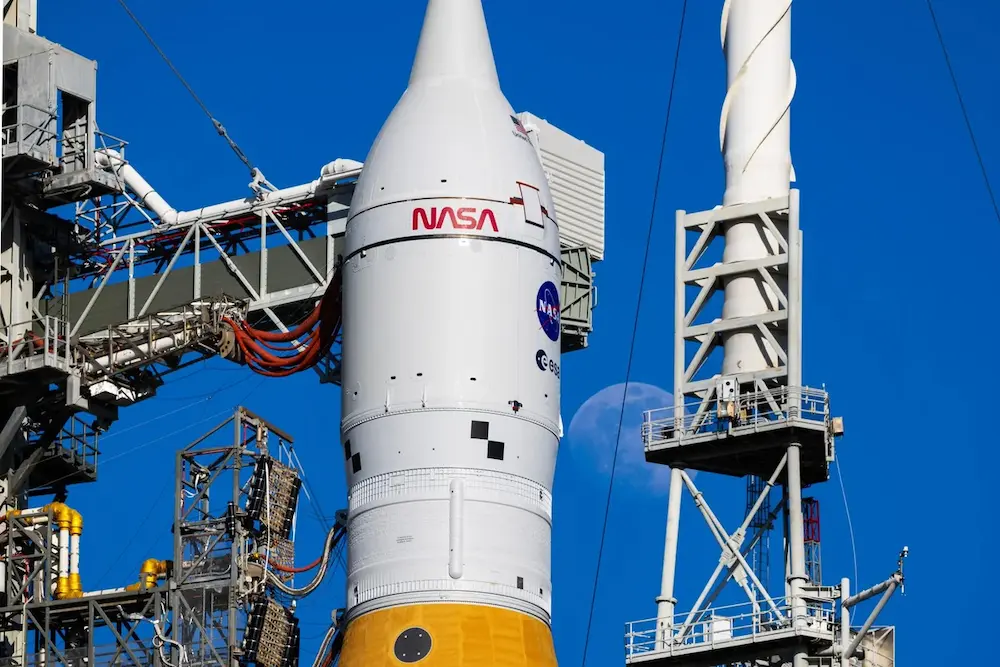
NASA has now offered its clearest public sketch yet of Artemis III, and the headline is a major shift: this mission is currently being shaped as a crewed Earth-orbit test flight, not the first Artemis lunar landing. For anyone searching for what Artemis III will actually do, the answer is increasingly concrete. Four astronauts would launch aboard the Space Launch System rocket in the Orion spacecraft, enter low Earth orbit, and rehearse the complex rendezvous and docking operations that later Moon landings will depend on.
That may sound less dramatic than boots in lunar dust, but in some ways it reveals just how intricate NASA’s Moon architecture has become. Artemis III is being designed to bring Orion together with commercial lunar lander pathfinders from SpaceX and Blue Origin, giving NASA and its partners a chance to test how these very different spacecraft, teams and procedures work together before astronauts are sent down to the Moon on Artemis IV. If the agency is trying to reduce risk before returning humans to the lunar surface, where better to do it than close to home?
The mission concept follows NASA’s February programme update, which inserted an additional Artemis flight ahead of future crewed lunar landings near the Moon’s south polar region. Since then, engineers have been refining mission profiles, operational choices and hardware plans. NASA stressed that the details remain preliminary, but the broad purpose is already clear: prove the choreography before attempting the full performance.
Under the current concept, Artemis III would launch from NASA’s Kennedy Space Center in Florida with four crew members aboard Orion. Because the mission is staying in Earth orbit, NASA does not need the interim cryogenic propulsion stage that normally pushes Orion away from Earth toward the Moon. Instead, the rocket will carry a spacer — a mass and size stand-in that preserves the vehicle’s geometry and interfaces without adding propulsion capability. Work on that hardware is already under way at NASA’s Marshall Space Flight Center.

Once in orbit, Orion’s European-built service module would perform the burn needed to circularise the spacecraft’s path in low Earth orbit. That choice is more than a technical footnote. NASA says it creates more launch opportunities for every mission element: Orion and its crew aboard SLS, SpaceX’s Starship human landing system pathfinder, and Blue Origin’s Blue Moon Mark 2 human landing system pathfinder. In other words, a low Earth orbit mission gives the agency more flexibility as it coordinates multiple spacecraft from multiple providers.
| Mission element | Current Artemis III plan |
|---|---|
| Crew size | Four astronauts |
| Launch vehicle | NASA Space Launch System |
| Crew spacecraft | Orion spacecraft |
| Mission destination | Low Earth orbit |
| Key objective | Rendezvous and docking tests with commercial lander pathfinders |
| Commercial partners | SpaceX and Blue Origin |
| Upper stage configuration | Non-propulsive spacer instead of interim cryogenic propulsion stage |
NASA has not yet said whether both landers will take part in the flight, but it has left the door open to astronauts entering at least one of the test articles. That would turn the mission into a hands-on rehearsal for later lunar operations, not merely a docking demonstration viewed from Orion’s windows.
The most revealing part of NASA’s update is its emphasis on operational realism. Artemis III is meant to show, for the first time, how Orion, astronauts, ground controllers and commercial landing systems function together as one mission system. That makes it one of the most complicated Artemis flights yet, even without a lunar landing.
The crew is expected to spend longer aboard Orion than the astronauts did on Artemis II, extending the evaluation of the spacecraft’s life support systems. Artemis III would also mark the first in-flight demonstration of Orion’s docking system performance, an ability that becomes indispensable once crews must transfer between vehicles during future lunar expeditions. NASA also plans to test an upgraded heat shield on Orion during re-entry, a change intended to support more flexible and robust return profiles later on.
There are still significant open questions. NASA is continuing to define mission duration, crew assignment timing, possible science activities and how to assess Axiom Space’s AxEMU spacesuit interfaces with landers ahead of eventual surface missions. The agency has also asked industry for ideas on communications support, since the Deep Space Network will not be used for this Earth-orbit flight.

For all the new detail, NASA is careful to describe Artemis III as a concept still being refined. No astronaut crew has been named. The exact mission timeline is still under study. It is not yet settled whether one or both commercial lander pathfinders will participate, nor what specific science or technology demonstrations will make the final cut.
NASA is also exploring opportunities beyond the core mission. The agency said it is seeking international and domestic interest in flying CubeSats for deployment in Earth orbit, suggesting Artemis III could become a broader testbed as its operational plan matures.
That mix of clarity and contingency is really the story here. Artemis III now has a defined purpose: reduce the technical and operational risk of future Moon landings by rehearsing the hardest pieces in low Earth orbit first. It is a pragmatic turn, and an illuminating one. Returning humans to the Moon was never going to be a simple replay of Apollo; the architecture is more distributed, more commercial and more interdependent. Artemis III is where NASA intends to find out whether all those moving parts can truly move together.
MissionsChina has launched the Shenzhou-23 crewed mission to the Tiangong space station, and the headline detail is hard to miss: one of the three astronauts …
Read more Missions
What does daily life look like when four astronauts leave low Earth orbit and head around the Moon? With NASA’s Artemis II now completed after launchi…
Read more Missions
NASA’s Artemis campaign has moved the story of lunar exploration into a new phase. After Artemis II carried astronauts around the Moon as the first cr…
Read more