 Explainers
What Is the Milky Way Galaxy? Everything You Need to Know
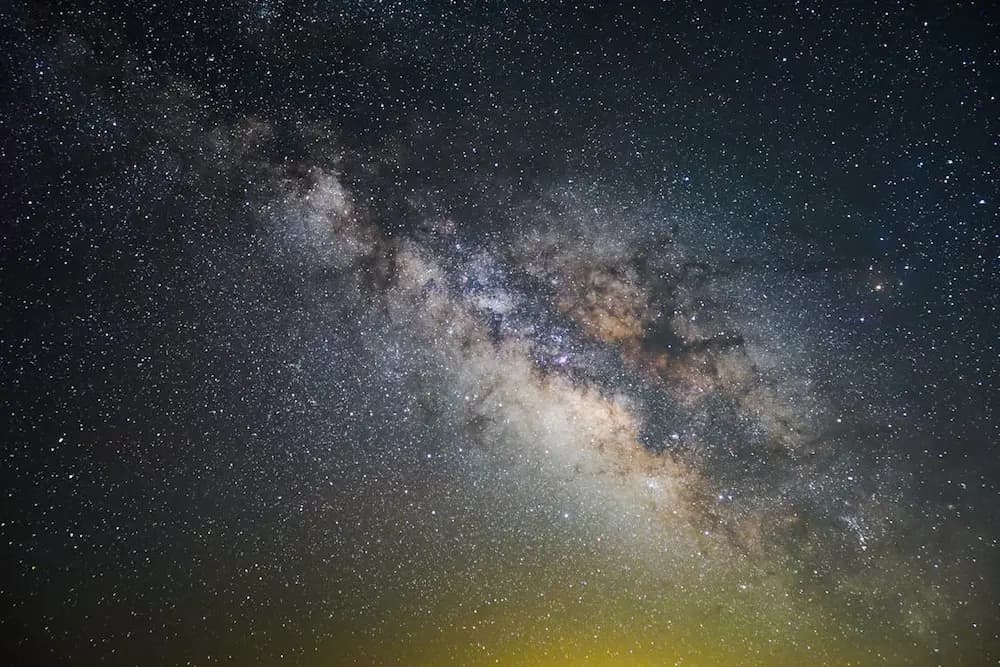
We live inside a galaxy so large that no one can step back and photograph it in a single frame. That is the central challenge of Milky Way astronomy: …
Read more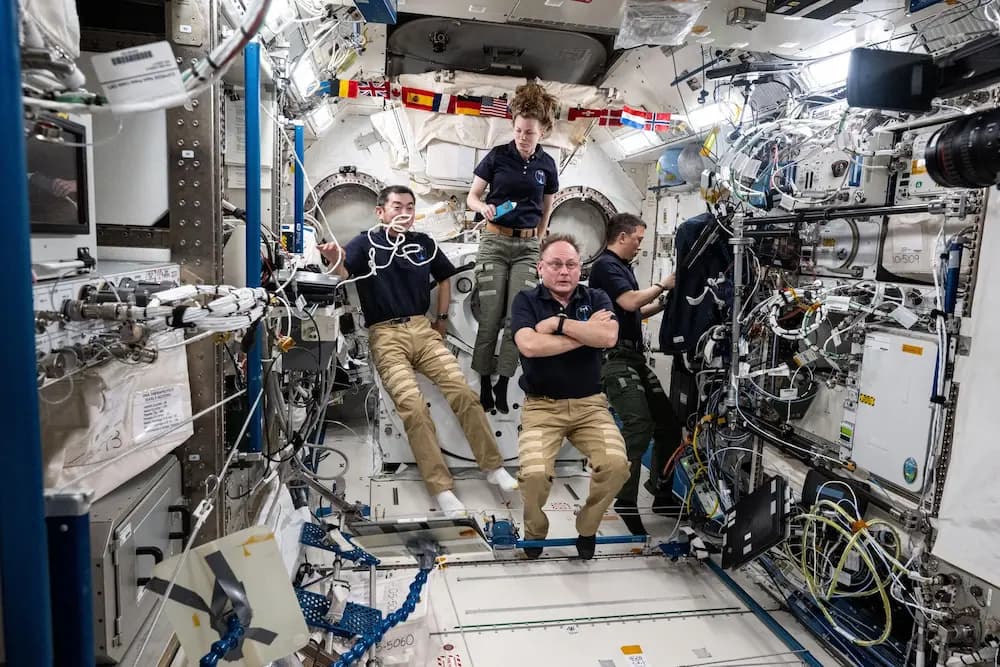
Astronauts aboard the International Space Station seem to drift effortlessly, as if gravity has somehow been switched off. It is one of the most persistent myths in spaceflight — and one of the most fascinating to unravel. In reality, astronauts do not float because there is no gravity in orbit. They float because the station, the crew and everything inside are all falling together around Earth.
That sounds strange at first. How can falling look so calm, so graceful, so unlike a plunge? The answer is orbit. The International Space Station is in low Earth orbit, roughly 100 to 200 miles above the planet according to NASA’s description of that region, and at that height Earth’s gravity is still very much in control. In fact, the pull is still strong — about 90% of what we feel at the surface. So if gravity is still there, what changes?
What disappears is not gravity but the everyday support force that usually pushes up on us from the ground, a chair or the floor beneath our feet. On Earth, your body feels weight because the floor stops you from falling. In orbit, the spacecraft and the people inside it are accelerating together under gravity alone, so nothing is holding the astronauts up. That shared free-fall creates the sensation we call weightlessness.
NASA defines an orbit as a regular, repeating path that one object takes around another. The key idea is a balance between forward motion and gravity. Left alone, an object in motion keeps moving forward. Gravity pulls it inward. Put those together and you get a curved path.
This is the counterintuitive truth at the heart of life in space: the International Space Station is constantly falling towards Earth, but it is also moving sideways fast enough to keep missing the ground. Earth curves away beneath it at the same rate that the station falls. Seen that way, orbit is not escaping gravity at all — it is an elegant negotiation with it.

NASA describes this as a tug-of-war between momentum and gravity. If a spacecraft’s forward motion were too great, it would fly past and fail to settle into orbit. Too little, and it would drop back down. At the right speed, it remains in continuous free-fall. That is why astronauts float, why loose objects drift beside them, and why water gathers into shimmering blobs instead of pouring downwards.
The station circles Earth astonishingly quickly. One orbit in low Earth orbit takes about 90 minutes, so the crew experiences repeated sunrises and sunsets each day. Yet despite that speed, the basic physical experience inside is not one of being flung outward but of everything falling together.
| Concept | What it means |
|---|---|
| Orbit | A repeating path around another object caused by forward motion and gravity |
| Low Earth orbit | The first 100 to 200 miles of space above Earth |
| ISS orbital period | About 90 minutes for one full trip around Earth |
| Weightlessness | The feeling produced when you and your surroundings are in free-fall together |
One of the easiest ways to clear up the confusion is to separate mass from weight. Mass is how much matter an object contains; it does not vanish in orbit. Weight is the force you feel when gravity pulls on you and a surface pushes back. Astronauts keep the same mass in space, but in free-fall they do not feel their weight in the usual way.
That is why space agencies and scientists often prefer the term microgravity instead of “zero-g”. The environment aboard the International Space Station is not a place with literally no gravity. Rather, it is a place where gravity dominates so completely that everything falls together, leaving only tiny residual accelerations.
Those small effects come from several sources: slight atmospheric drag even at orbital height, vibrations from equipment and crew activity, and spacecraft manoeuvres. So the station is not a perfect weightless laboratory, but it is close enough to reveal physical behaviour that is hidden on Earth.
You can glimpse the same principle much closer to home. Drop-tower experiments briefly create free-fall conditions by letting an experiment fall inside a controlled system. Parabolic aircraft flights — often nicknamed “vomit comets” — do something similar by following an arc that lets passengers and equipment fall together for short periods. In both cases, gravity has not gone away. The support force has.

Once you understand that astronauts are in a perpetual fall, life aboard the station looks even more extraordinary. Ordinary actions become unfamiliar choreography: sleeping strapped in place, moving with fingertip pushes, catching drifting tools before they glide away. Even a sip of water turns into a floating sphere that quivers in the air before being swallowed.
For researchers, that strange setting is far more than a curiosity. In microgravity, fluids move differently, flames behave in unusual ways, and crystals can grow with fewer distortions than they do under Earth’s constant pull. Some experiments are therefore not just easier in orbit but fundamentally different. The station becomes a laboratory where scientists can isolate effects that gravity usually masks.
That is the deeper wonder behind the sight of astronauts floating through a module. It is not a trick of distance from Earth, nor a sign that gravity has faded into irrelevance. Quite the opposite: gravity is still there, shaping every moment. Weightlessness in orbit is really the sensation of surrendering to that pull completely, while moving sideways so fast that the fall never ends.
And perhaps that is why the image remains so compelling. What looks like effortless drifting is actually one of the most precise balancing acts in nature — a spacecraft, its crew and an entire orbital laboratory endlessly falling around a world that keeps curving away beneath them.
ExplainersWe live inside a galaxy so large that no one can step back and photograph it in a single frame. That is the central challenge of Milky Way astronomy: …
Read more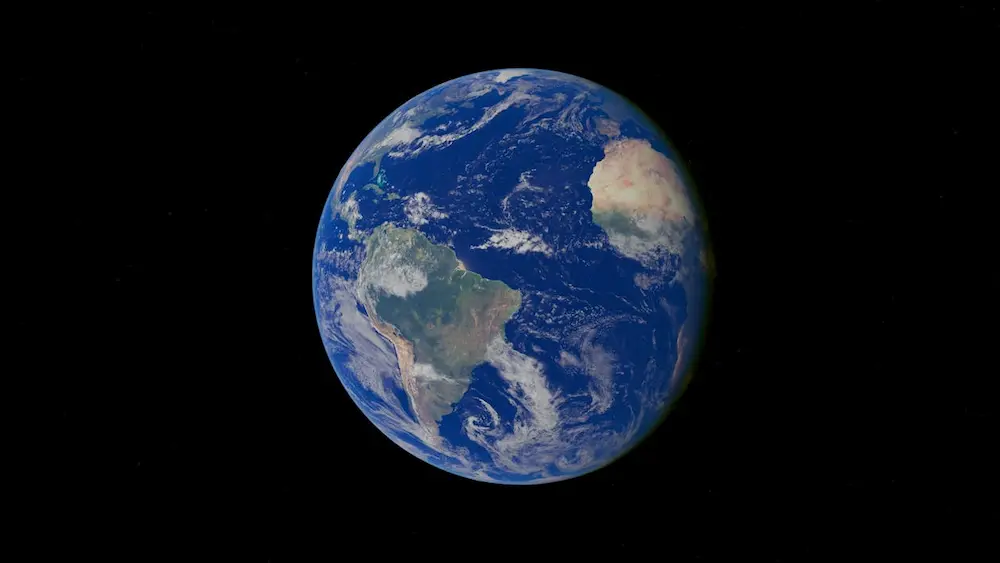 Explainers
Earth’s spin feels so constant that it is easy to treat it as background scenery rather than one of the defining facts of our planet. Yet the ground b…
Read more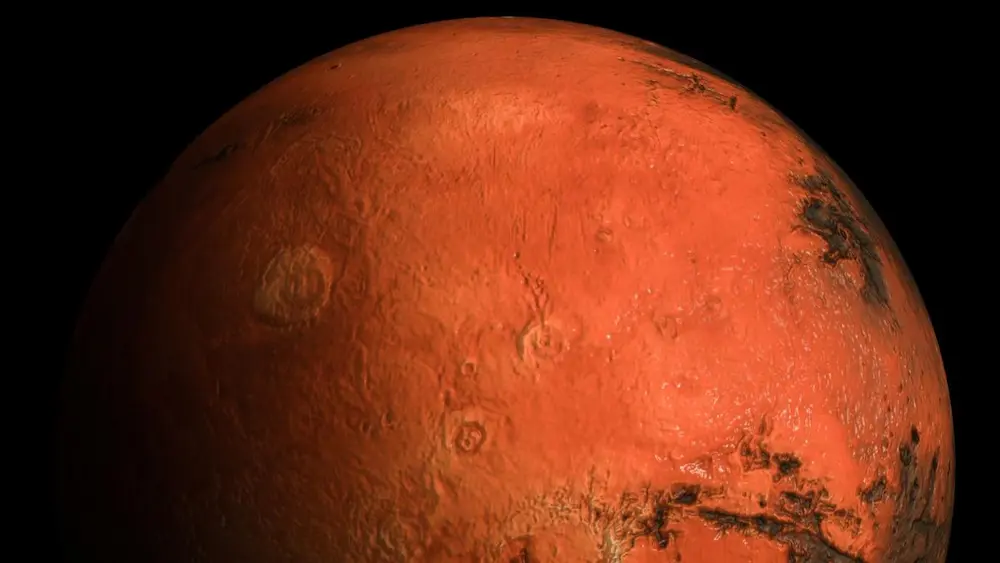 Explainers
Mars looks red for a reason, but the familiar nickname hides a more interesting reality. The planet does not glow with one uniform scarlet hue, nor is…
Read more