 News
NewsNorthern Lights Alert Upgraded Across 23 States
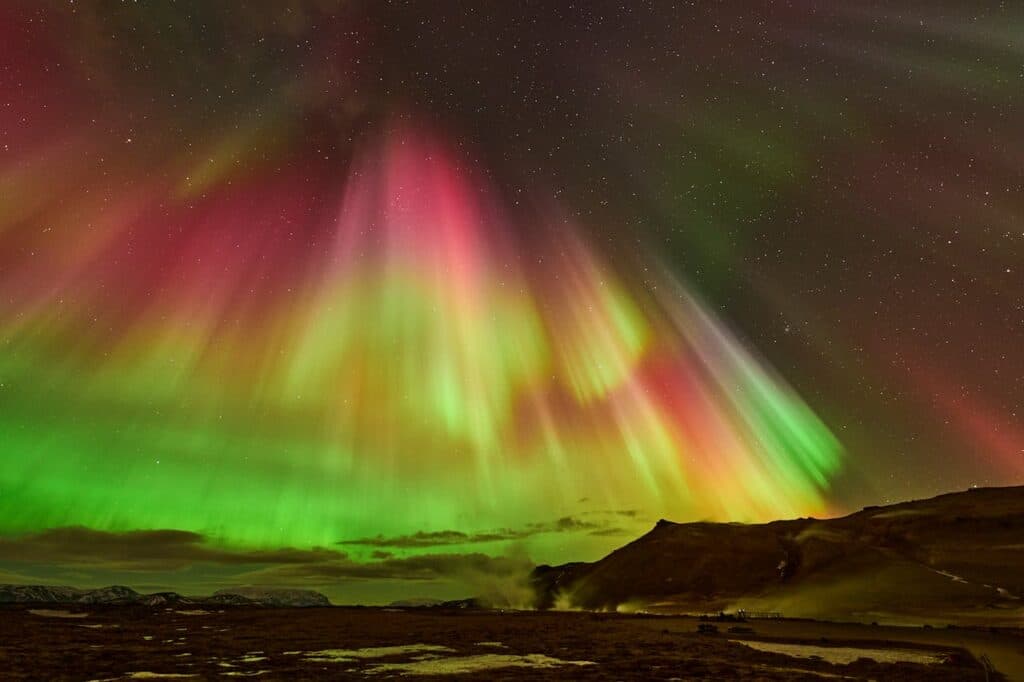
The National Oceanic and Atmospheric Administration’s Space Weather Prediction Center upgraded its aurora outlook for Thursday, 4 June into Friday, 5 …
Read more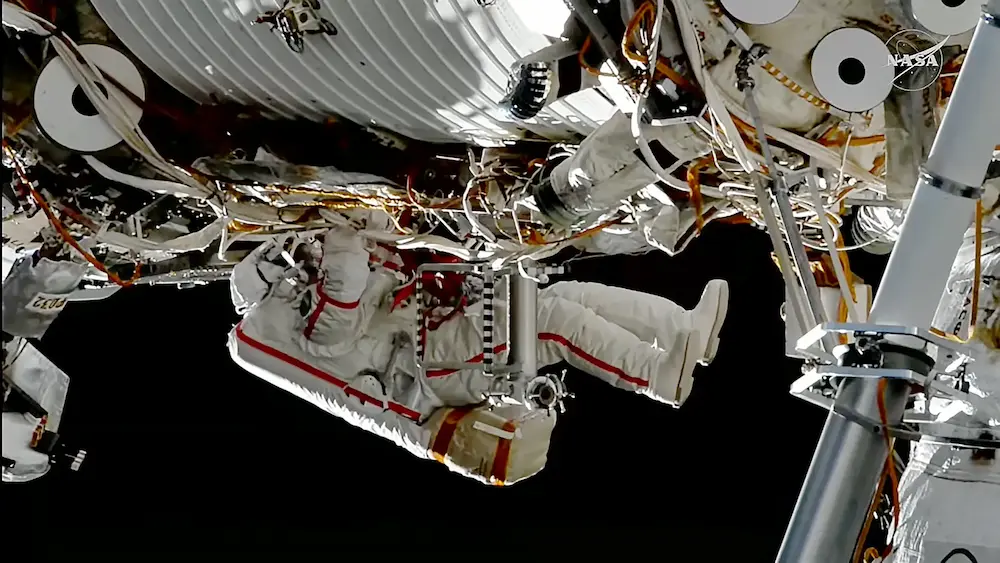
Two Roscosmos cosmonauts stepped back inside the International Space Station on 27 May 2026 after a tightly choreographed spacewalk that blended orbital maintenance with fresh science. According to NASA’s International Space Station blog, Sergey Kud-Sverchkov and Sergei Mikaev completed their extravehicular activity at 4:23 p.m. EDT after 6 hours and 5 minutes outside the orbiting laboratory, wrapping up a mission centred on installing a new solar-observing instrument on the Russian segment.
For anyone wondering what happened, the answer is straightforward: the pair successfully mounted a device on the Zvezda service module to track bursts of solar radiation linked to solar flares, while also retrieving completed experiments and inspecting hardware on a docked cargo spacecraft. That mix of tasks captures something essential about the International Space Station in 2026. Even in its later years, the station is not merely being maintained; it is still gaining new tools for research.
Space.com added context that the newly installed instrument is the Solntse-Teragerts telescope, designed to observe powerful solar flares and gather data at different frequencies. Why place such an instrument outside the station? Because space weather is not an abstract concept. Solar outbursts can affect satellites, communications systems, power infrastructure and, of course, crews living beyond Earth’s protective atmosphere.
NASA said the EVA began at 10:18 a.m. EDT and met its major objectives. The headline task was the installation of the new solar radiation experiment on Zvezda. Space.com reported that the telescope is expected to operate through 2028 and is intended to help scientists refine prediction models while improving understanding of solar flare behaviour.

That made the telescope the most consequential element of the outing, but it was not the only one. Kud-Sverchkov and Mikaev also removed a microorganism study from the exterior of the Poisk module and retrieved a cassette from the Nauka module containing results tied to how semiconductor materials form in microgravity. Space.com identified this as part of the Ekran-M molecular beam epitaxy experiment, which uses gallium arsenide to grow ultra-pure, ultra-thin films in orbit.
The cosmonauts carried out an inspection as well, photographing one of two Kurs rendezvous antennas on the Progress 94 cargo spacecraft that had failed to deploy after the vehicle’s March launch. After documenting the issue, they secured the antenna with a tie-down for future dynamic operations.
| EVA detail | Information |
|---|---|
| Date | 27 May 2026 |
| Spacewalkers | Sergey Kud-Sverchkov and Sergei Mikaev |
| Start time | 10:18 a.m. EDT |
| End time | 4:23 p.m. EDT |
| Duration | 6 hours, 5 minutes |
| Primary task | Install the Solntse-Teragerts solar-observing instrument on the Zvezda service module |
| Other tasks | Retrieve experiments from Poisk and Nauka; inspect and secure Progress 94 antenna |
| Outcome | Major objectives completed; cosmonauts returned safely inside the station |
The most compelling part of this EVA was not simply that another payload was attached to the station’s exterior. It was what that payload is meant to watch. Solar flares release intense bursts of energy, including radiation that can ripple through the near-Earth environment. Better observations help researchers understand when the Sun turns especially violent and how those events unfold across different frequencies.
That does not make the International Space Station a replacement for dedicated solar observatories, and the sources do not suggest otherwise. Instead, the new instrument adds another useful layer of observation from a unique platform that is already supporting a broad range of experiments. There is something quietly remarkable about that. More than a quarter-century into station assembly and operations, astronauts and cosmonauts are still heading outside not just to keep the outpost alive, but to expand what it can see.
NASA’s operational summary and Space.com’s reporting together also show how demanding these outings remain. During work on the Nauka-mounted experiment, the pair encountered some trouble retrieving the cassette: a pair of pliers was lost, and commands from the ground did not move the experiment’s internal mechanisms as planned. Even so, workarounds allowed them to bring the sample back inside. In the unforgiving vacuum of low Earth orbit, that kind of improvisation is often the real texture of a successful spacewalk.
The EVA was the second career spacewalk for Kud-Sverchkov and the first for Mikaev. NASA said it was also the 279th spacewalk in support of International Space Station assembly, maintenance and upgrades. Space.com added that Kud-Sverchkov has now logged 12 hours and 11 minutes of EVA time.
There were a few symbolic moments during the outing, including photographs marking the 80th anniversary of RSC Energia and a brief birthday message for St. Petersburg. Yet those were side notes to the day’s more lasting achievement: a new eye on the Sun, now mounted outside humanity’s long-running orbital outpost.
As of 28 May 2026, no separate commissioning timeline beyond the instrument’s expected operation through 2028 was provided in the supplied sources, and no related future EVA was specified. What is clear already is the broader picture. At a time of heightened solar activity, the installation of the Solntse-Teragerts telescope gives researchers another stream of data to study how solar eruptions behave and how their effects might be better forecast. For a station that continues to reinvent its scientific purpose, that is a powerful addition.
NewsThe National Oceanic and Atmospheric Administration’s Space Weather Prediction Center upgraded its aurora outlook for Thursday, 4 June into Friday, 5 …
Read more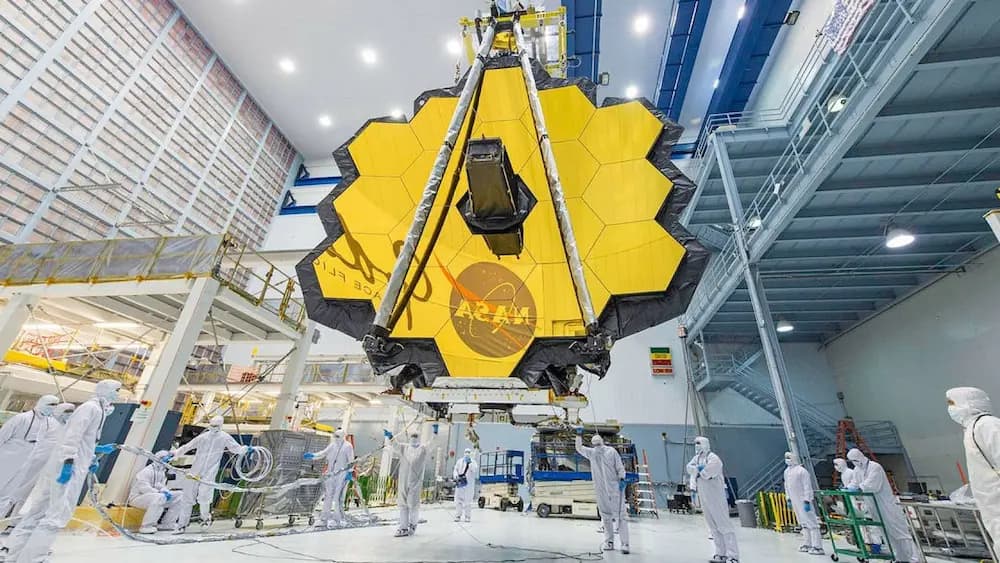 News
NewsNASA’s James Webb Space Telescope has captured something remarkably rare: a detailed chemical fingerprint from an object that came from beyond our Sol…
Read more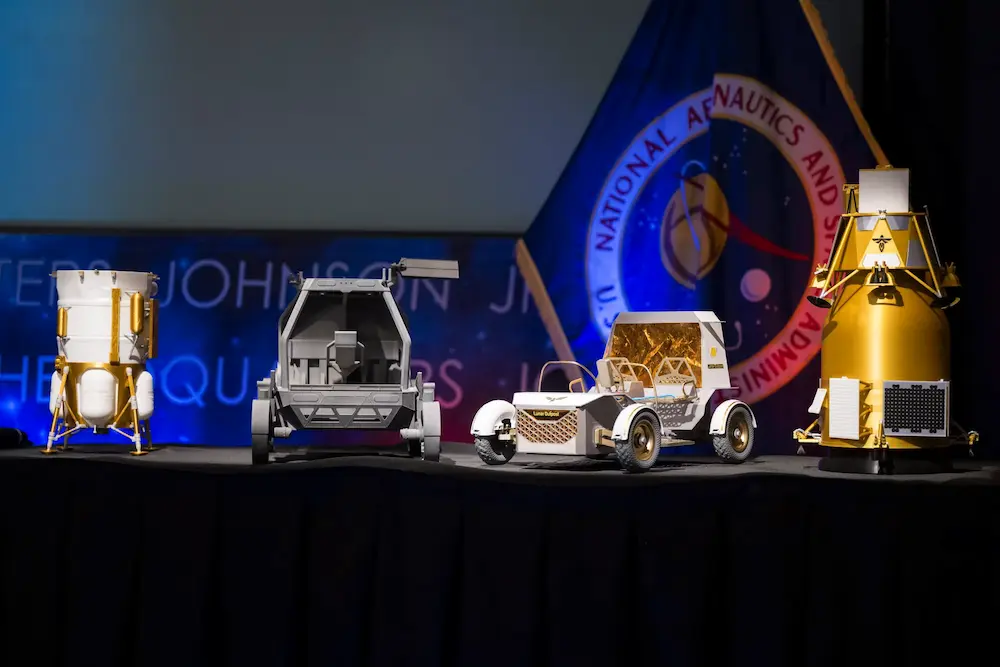 News
NewsNASA has taken a more concrete step towards a sustained human foothold at the lunar south pole, laying out the first missions, rover contracts and car…
Read more