 News
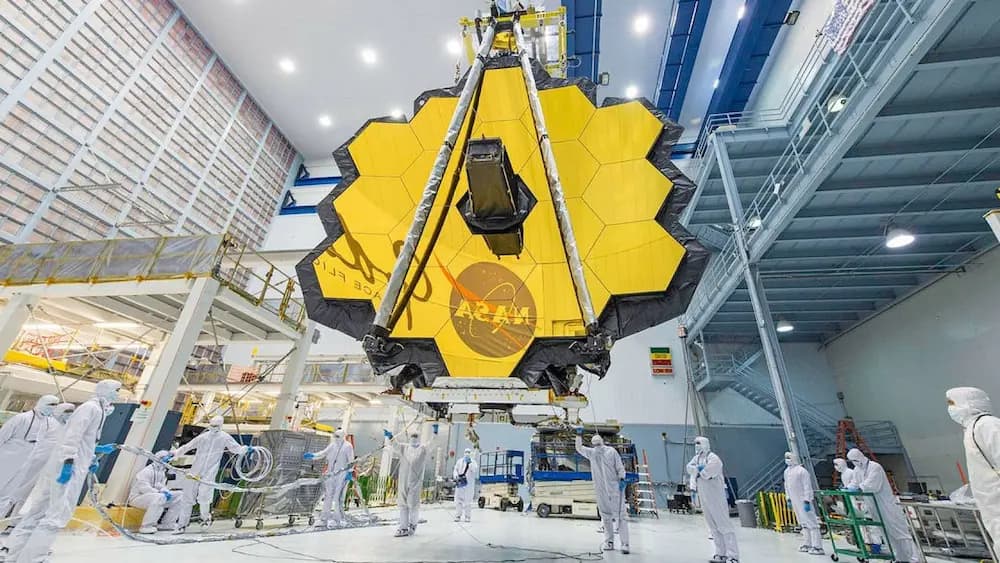
NewsWebb finds methane on interstellar comet 3I/ATLAS
NASA’s James Webb Space Telescope has captured something remarkably rare: a detailed chemical fingerprint from an object that came from beyond our Sol…
Read more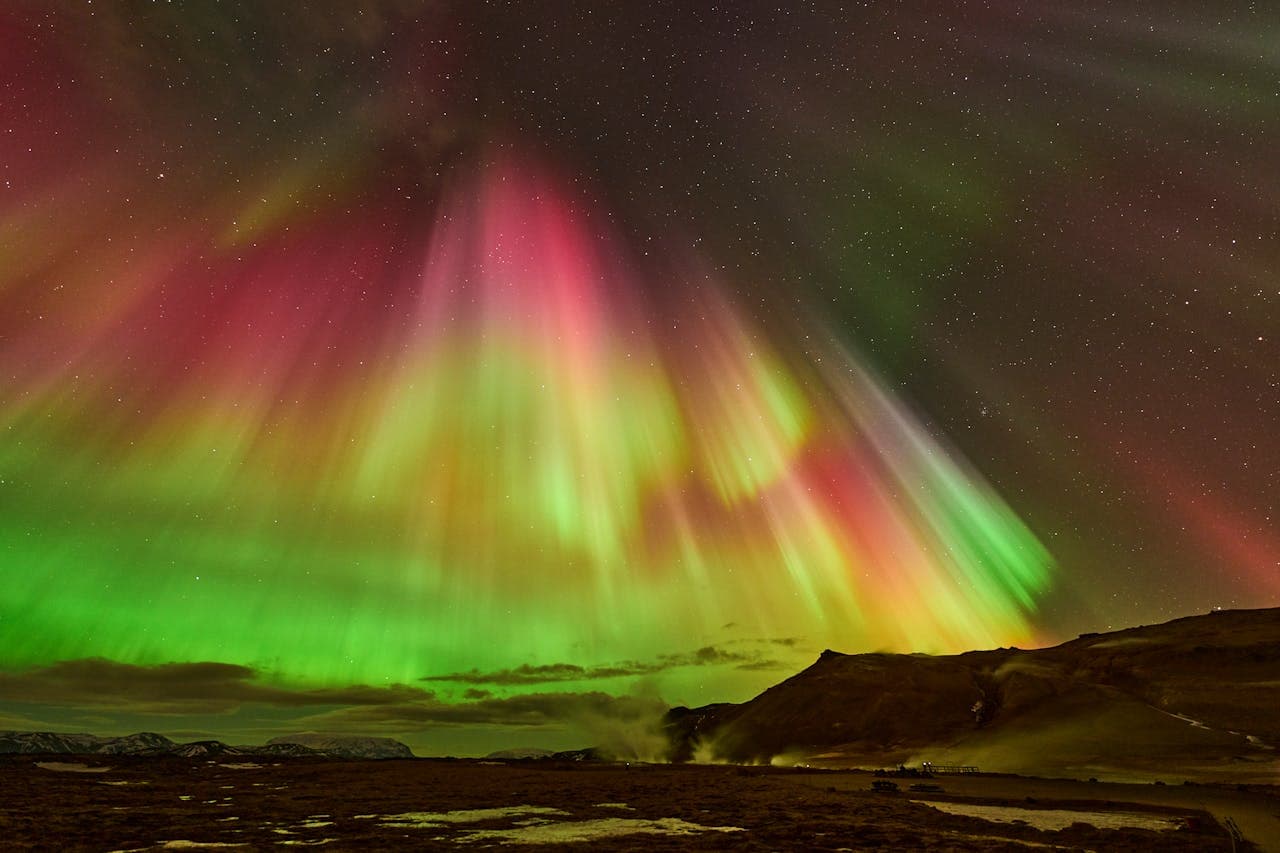
The National Oceanic and Atmospheric Administration’s Space Weather Prediction Center upgraded its aurora outlook for Thursday, 4 June into Friday, 5 June, raising the prospect of a striking northern lights display across as many as 23 U.S. states. For anyone wondering whether the aurora might be visible tonight, the short answer is: possibly, and much farther south than usual if the storm peaks at the highest forecast intensity.
According to the latest forecast cited by Forbes, multiple Earth-directed coronal mass ejections, or CMEs, were expected to hit Earth’s magnetic field in quick succession. NOAA said G2 (Moderate) and G3 (Strong) geomagnetic storm conditions were likely on Thursday afternoon and evening in North America, with a chance of isolated G4 (Severe) conditions during the peak overnight period. That matters because G4 storms can shove the auroral oval well beyond its usual polar haunts.
In practice, that means skywatchers across the northern tier of the United States had reason to keep a very close eye on conditions after dark. But as every experienced aurora watcher knows, a forecast is not a guarantee. Cloud cover, light pollution and the exact behaviour of the incoming solar wind all determine whether the sky merely glows faintly or erupts into visible curtains of green and red.
The most significant shift in NOAA’s outlook was timing. Earlier forecasts had suggested Friday would bring the strongest activity, but the updated projection moved the spotlight firmly onto Thursday night. NOAA’s forecast discussion said geomagnetic conditions were expected to ramp up quickly on 4 June, reaching G3 levels from mid to late day and continuing into 5 June as multiple CMEs arrived.

The cited Kp forecast rose from 6.33 between 15:00 and 18:00 UTC on 4 June to 6.67 between 18:00 and 21:00 UTC. Those values translate to afternoon and evening in North America, setting up the possibility of visible aurora after local darkness fell. NOAA also flagged the chance of isolated G4 periods during the peak of the multi-CME passage over 4–5 June.
There is a catch, and it is a familiar one in space weather: forecasts can change fast. The source notes that the most dependable short-term guidance may come only around 30 minutes before peak activity. So if you were planning to head outside, real-time monitoring mattered almost as much as the broader forecast. After all, what could be more frustrating than driving to a dark site just as the magnetic field turns unhelpfully northward?
| Forecast element | Detail |
|---|---|
| Likely storm levels | G2 (Moderate) to G3 (Strong) |
| Peak risk | Isolated G4 (Severe) possible |
| Kp forecast window 1 | 6.33 from 15:00–18:00 UTC on 4 June |
| Kp forecast window 2 | 6.67 from 18:00–21:00 UTC on 4 June |
| Main driver | Multiple Earth-directed CMEs |
The strongest viewing prospects were in Washington, Idaho, Montana, Wyoming, North Dakota, South Dakota, Minnesota, Wisconsin, Michigan, New York and Maine. The forecast also extended possible visibility into Oregon, Nebraska, Iowa, Illinois, Indiana, Ohio, Pennsylvania, Massachusetts, Connecticut, Rhode Island, Vermont and New Hampshire.
That list sounds expansive, but the geography of aurora viewing is always more selective than a state-by-state map suggests. Northern horizons matter. So do genuinely dark skies. Urban glow can erase a weak display, while a clearer rural horizon can reveal structure and colour even when the aurora remains low. The bright complication on this occasion was an 82%-lit waning gibbous Moon, rising after midnight and likely to wash out fainter activity.
Seasonal timing also worked against observers. With the June solstice approaching, nights across the northern U.S. and much of Canada were already becoming very short, with lingering twilight eating into the darkest hours. That does not prevent aurora, but it raises the threshold for what becomes easily visible to the eye.

The source attributes the upgraded forecast to multiple CMEs launched on 3 and 4 June. These are immense clouds of superheated gas and magnetic field thrown into space by the Sun after solar flares. When several CMEs travel along similar paths, they can interact and amplify one another, a process sometimes nicknamed a cannibal CME. That is one reason forecasters took the event seriously enough to allow for severe conditions.
Yet the real wildcard was not just the Kp index. The more decisive factor for aurora intensity is the orientation of the interplanetary magnetic field, especially its north-south component, known as Bz. If Bz turns southward, energy from the solar wind couples much more effectively with Earth’s magnetic field, and auroral activity can intensify rapidly. The source notes that a sustained southward Bz of −5 nT or stronger is usually a strong sign that aurora is imminent.
For observers, the advice was simple and familiar: look north from a dark location as soon as skies are properly dark, keep checking live updates from NOAA and other real-time trackers, and be prepared for conditions to improve or fade quickly. That blend of uncertainty and spectacle is part of the aurora’s appeal. It is not a performance on schedule; it is the Sun briefly writing on Earth’s magnetic shield.
NewsNASA’s James Webb Space Telescope has captured something remarkably rare: a detailed chemical fingerprint from an object that came from beyond our Sol…
Read more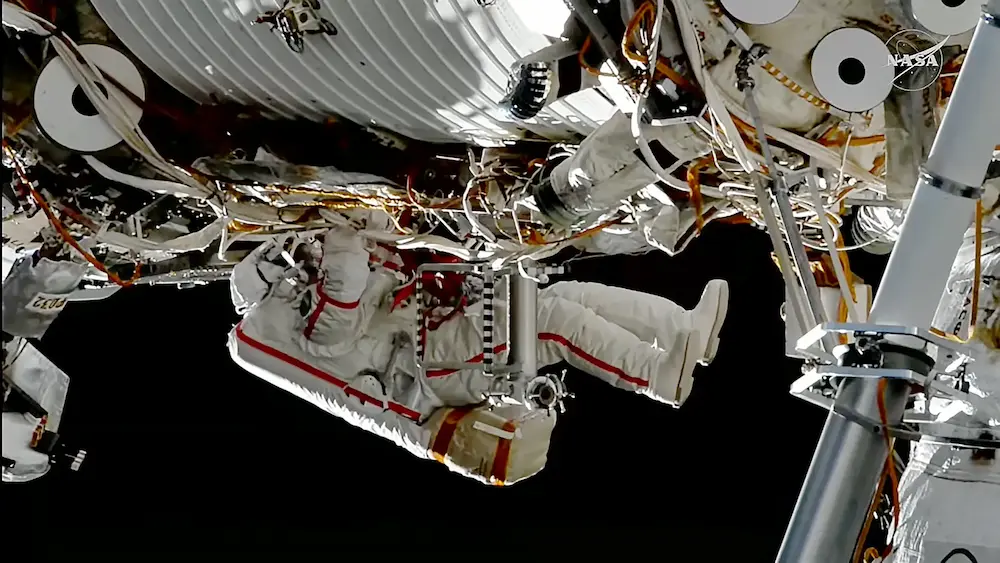 News
NewsTwo Roscosmos cosmonauts stepped back inside the International Space Station on 27 May 2026 after a tightly choreographed spacewalk that blended orbit…
Read more News
NewsNASA has taken a more concrete step towards a sustained human foothold at the lunar south pole, laying out the first missions, rover contracts and car…
Read more