 Missions
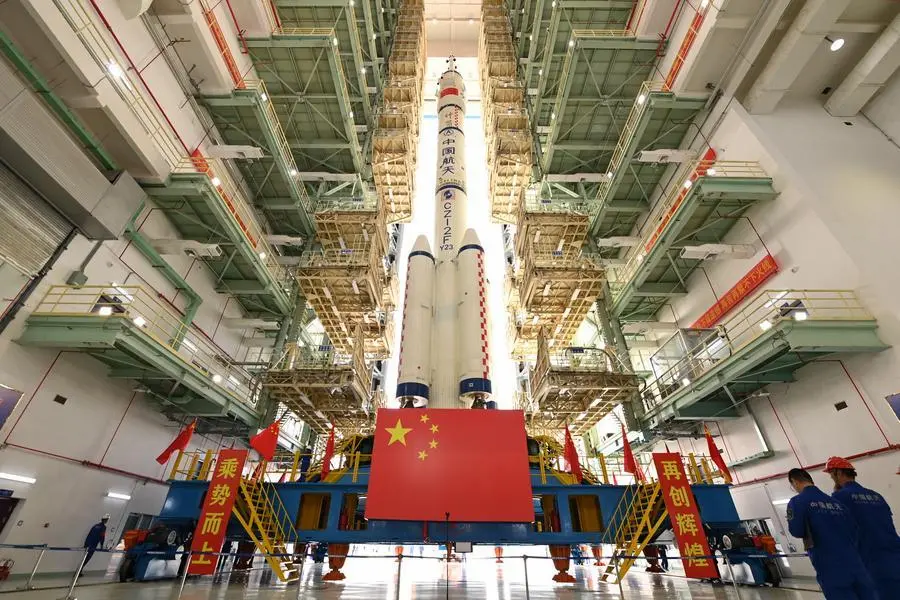
Shenzhou-23 marks China’s first planned year in orbit
China has launched the Shenzhou-23 crewed mission to the Tiangong space station, and the headline detail is hard to miss: one of the three astronauts …
Read more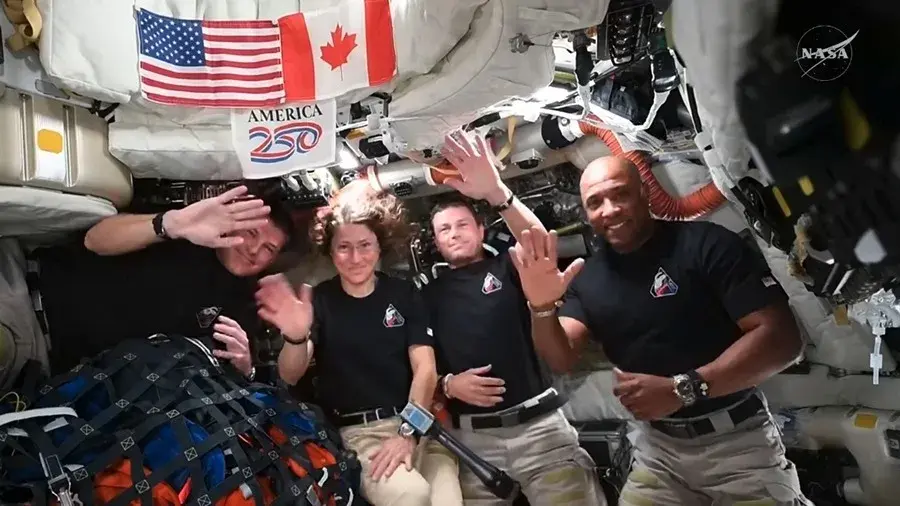
What does daily life look like when four astronauts leave low Earth orbit and head around the Moon? With NASA’s Artemis II now completed after launching on 1 April 2026 and splashing down on 10 April, we no longer have to talk about Orion as an abstract deep-space capsule. The mission lasted 9 days, 1 hour and 32 minutes, offering a clear picture of how astronauts can sleep, eat and stay alive inside a spacecraft built for far more than a quick trip to orbit.
That matters because Orion is not the International Space Station. There is no roomy laboratory, no sprawling collection of modules and no galley-like setup for long, semi-routine life in orbit. Artemis II was a crewed lunar flyby, a tightly managed mission in which mass, power, water and space all had to be used carefully. Every system aboard had one job: keep the crew functioning while travelling farther from Earth and closer to the Moon than any humans had been in more than half a century.
At the centre of that effort was a partnership. NASA’s Orion capsule carried the crew, while the European Service Module, contributed by the European Space Agency, supplied electricity, water, oxygen and nitrogen, helped control temperature and kept the spacecraft on course. Without it, Orion would be a shell. With it, the spacecraft became a genuine deep-space habitat, however compact.
In weightlessness, sleep is less about lying down than about staying put. Astronauts typically secure themselves so they do not drift into equipment or one another, and a mission such as Artemis II would have relied on a strict timeline to help manage light exposure, noise and circadian rhythm. In deep space, that structure becomes even more valuable. If the view outside includes the Moon and the black beyond, how do you persuade the body that it is time for bed? You do it with discipline, scheduling and a cabin environment designed to reduce confusion as much as possible.

Meals, too, were a study in efficiency. Orion’s approach draws from established spaceflight practice: rehydratable and thermostabilized food, hot and cold water dispensing, and close menu planning so the crew gets what it needs without wasting precious mass or volume. Crumbs are more than an annoyance in microgravity, so food choices and packaging matter. Compared with life aboard the International Space Station, the experience in Orion was necessarily more constrained. There was far less room, less flexibility and no illusion of domestic comfort.
Hygiene follows the same logic. There are no showers in Orion. Cleaning depends on wipes and very limited water use, while waste handling relies on a compact toilet design suited to a small spacecraft. That sounds mundane, but it is one of the quiet realities of exploration: human spaceflight succeeds or fails not only on rockets and navigation, but on whether a crew can manage ordinary bodily needs inside an extraordinary machine.
| Artemis II fact | Details |
|---|---|
| Mission type | Crewed lunar flyby |
| Launch date | 1 April 2026 |
| Splashdown date | 10 April 2026 |
| Mission duration | 9 days, 1 hour, 32 minutes |
| Launch vehicle | NASA’s Space Launch System |
| Crew vehicle support module | European Service Module from the European Space Agency |
The real marvel of Artemis II was not only that humans flew around the Moon, but that Orion sustained them in a place where space offers no mercy. NASA describes Orion as the exploration vehicle that carries and sustains crews on Artemis missions and returns them safely to Earth. In practical terms, that means managing air, water, temperature and the build-up of carbon dioxide in a sealed environment where any imbalance can quickly become serious.
The European Service Module did much of the invisible heavy lifting. ESA says it provides electricity, water, oxygen and nitrogen, while also keeping the spacecraft at the right temperature and on course. Its solar array unfolds to span 19 metres once Orion is above the atmosphere, giving the spacecraft the power it needs for a multi-day mission. The module also carries large tanks for fuel and for crew consumables, and its radiators and heat exchangers help maintain a stable internal environment. In a capsule bound for lunar distance, comfort is really another word for survival.
The module’s heritage adds another layer to the story. ESA notes that it evolved from the Automated Transfer Vehicle, the cargo craft that supported the International Space Station. That lineage makes sense: systems first refined for orbital logistics are now part of a spacecraft designed for human journeys deeper into space.

NASA framed Artemis II as a key step towards a long-term return to the Moon and future missions to Mars, and the mission’s value lies precisely in that bridge between ambition and engineering. A lunar flyby is spectacular, but it is also a proving ground. The crew worked with scientists on Earth to support investigations intended to inform future human spaceflight, including research into the effects of increased radiation and microgravity through the AVATAR organ-chip investigation.
That focus on human health is revealing. Deep-space exploration is not only about propulsion and navigation; it is about understanding what happens to bodies and minds when Earth becomes a distant bright disc. Artemis II showed that Orion, launched by NASA’s Space Launch System and supported by Exploration Ground Systems, can serve as more than a transport vehicle. It can function as a compact, tightly controlled home for astronauts venturing beyond the region where crews have lived for decades.
And that may be the most arresting image Artemis II leaves behind: people eating carefully packaged meals, managing sleep in microgravity and trusting a web of air loops, tanks, radiators and power systems while looping around the Moon. Exploration often arrives wrapped in grand language. Yet in Orion, it ultimately depended on something more intimate — the ability to keep four humans alive, healthy and working inside a small spacecraft on the road to the next era of lunar exploration.
MissionsChina has launched the Shenzhou-23 crewed mission to the Tiangong space station, and the headline detail is hard to miss: one of the three astronauts …
Read more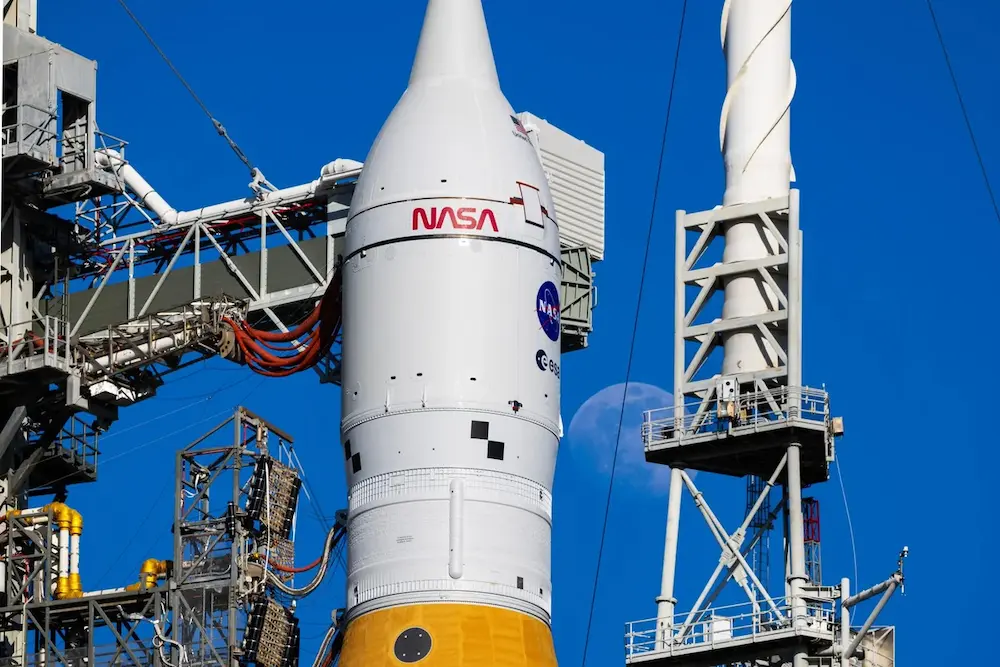 Missions
NASA has now offered its clearest public sketch yet of Artemis III, and the headline is a major shift: this mission is currently being shaped as a cre…
Read more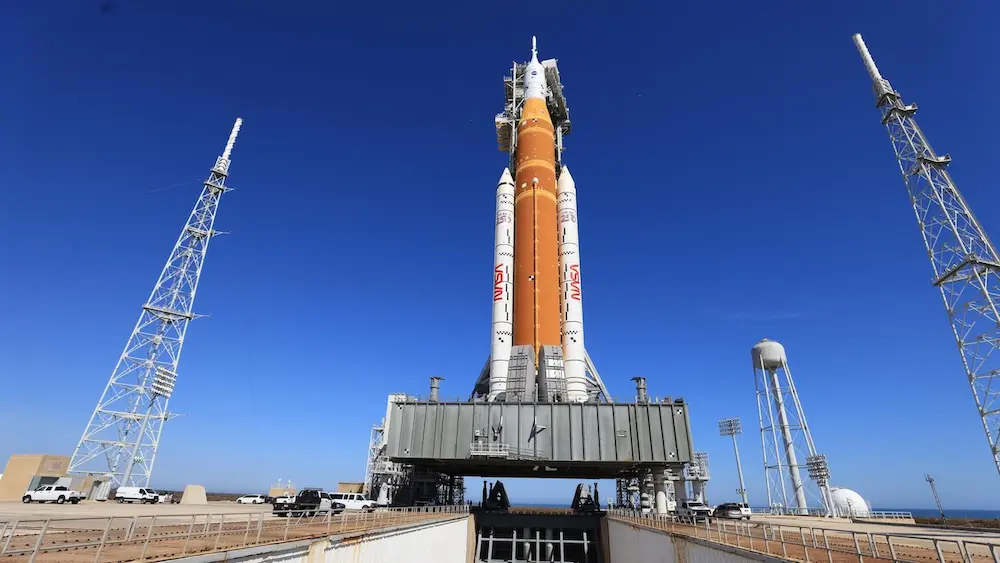 Missions
NASA’s Artemis campaign has moved the story of lunar exploration into a new phase. After Artemis II carried astronauts around the Moon as the first cr…
Read more