 Explainers
What Is the Milky Way Galaxy? Everything You Need to Know
We live inside a galaxy so large that no one can step back and photograph it in a single frame. That is the central challenge of Milky Way astronomy: …
Read more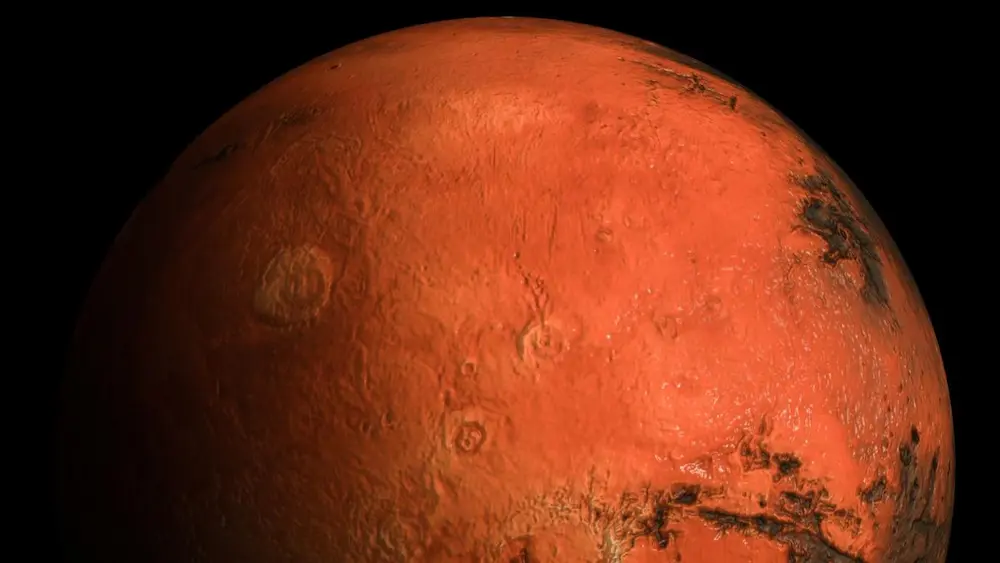
Mars looks red for a reason, but the familiar nickname hides a more interesting reality. The planet does not glow with one uniform scarlet hue, nor is its surface simply covered in everyday rust. What we see from Earth is the combined effect of iron-rich rocks, ultra-fine dust and a long history of chemical weathering that has transformed Mars into the Solar System’s most recognisable world.
NASA describes Mars as dry, rocky and bitterly cold, yet it has also revealed a planet shaped by a wetter and warmer past. That matters because the famous colour is tied to iron in Martian rocks and the slow processes that altered it over billions of years. In plain terms, Mars is red for much the same basic reason an old bicycle left in the rain turns reddish-brown: iron reacts and forms oxides. On Mars, though, the story is broader than simple rust. Fine iron-oxide dust blankets the landscape and hangs in the thin atmosphere, tinting the entire planet from afar.
The result is a world that seems straightforward at first glance, then immediately becomes stranger. Look closer and Mars is not just red. Some fresh impact craters expose darker material, dunes can appear grey or black, and rovers have shown that different terrains carry very different tones. And then there is the sky: often butterscotch by day, yet capable of blue sunsets. On a planet famous for redness, what could be more delightfully counterintuitive?
The core ingredients begin with Martian bedrock. Mars is rich in volcanic, iron-bearing rock, especially basalt. Over immense spans of time, that iron was altered into iron oxides, including forms detected from orbit such as hematite. The reddish material did not stay neatly locked in place. Winds ground rock into extremely fine dust, spreading it across the surface and lifting it into the atmosphere.
That dust is central to the planet’s appearance. NASA’s Mars missions have repeatedly shown that Mars is a world of coatings and veneers as much as solid stone. Rovers such as Perseverance and Curiosity explore places about 2,300 miles, or about 3,700 kilometres, apart, and together they reveal a planet with striking regional variety. Beneath the dust, rocks can look far less red than the global view suggests. Freshly exposed material, darker volcanic surfaces and mobile dunes can all break the stereotype.

Mars also does not need present-day oceans for oxidation to have happened. NASA notes abundant evidence that the planet was once wetter and warmer, with a thicker atmosphere, and that older environment would have helped alter iron-bearing minerals. Over time, additional chemistry in the atmosphere and surface environment could continue changing the rocks. The end product is a planet coated in oxidised, iron-rich dust fine enough to behave almost like powder in a sunlit room.
| Mars colour clue | What NASA observations show |
|---|---|
| Surface rocks | Iron-rich, basaltic material forms much of the crust |
| Oxidised minerals | Orbital observations have identified iron oxides including hematite |
| Fine dust | Dust coatings and airborne particles give Mars its red global appearance |
| Fresh exposures | Craters, darker rocks and dunes show Mars is not uniformly red |
| Atmospheric dust | Dust in the air helps colour the sky and intensify the planet’s tint from space |
One of the most revealing things about Mars exploration is how often the Red Planet refuses to match the postcard version. NASA calls it the only planet known to be inhabited entirely by robots, and those robotic explorers have made the view far more nuanced. Mars Reconnaissance Orbiter searches for evidence that water persisted on the surface for long periods, while surface missions inspect rocks up close, where dust coatings can disguise what lies beneath.
Curiosity is investigating whether Mars was ever habitable to microbial life, and Perseverance is collecting samples that could eventually be returned to Earth. Their work is scientifically aimed at habitability and planetary history, but visually it also reminds us that Mars is a patchwork world. A wind-cleaned rock face can look very different from a dusty plain. A recent crater can cut through the reddish veneer and expose darker material below. Even panoramic views from the rovers show landscapes ranging from rusty tones to muted greys and deeper volcanic shades.
Global dust storms amplify the effect. When fine particles spread through the atmosphere, Mars can look more uniformly red on the planetary scale than it does at ground level. That is the trick of Mars: distance smooths out the details. Up close, the planet is geologically richer and visually more complicated than its nickname suggests.

The Martian sky may be the best example of how dust controls what we see. By day, the atmosphere often appears butterscotch because suspended dust scatters sunlight in a way that favours those warm tones. The same fine particles that redden the planet from orbit also reshape the sky above the surface.
Near sunset, however, Mars flips expectations. Instead of the red and orange sunsets familiar on Earth, Mars can produce a blue glow around the Sun. The reason again comes down to dust particle size and the way light is scattered. Fine dust in the thin Martian air redirects light differently near the setting Sun, making the area around it appear bluish while the wider sky keeps its warmer cast.
It is one of those planetary details that feels almost designed to provoke wonder. A red planet with blue sunsets sounds like science fiction, yet it is a natural consequence of real Martian physics. And that may be the most useful way to think about Mars as a whole. Its redness is real, but it is not simple: it comes from iron-rich volcanic rock, oxidised minerals and planet-encircling dust. Strip away the dusty coating in places, and Mars reveals darker surfaces beneath. Look up from that dusty ground, and the sunset turns blue. The Red Planet, as ever, is more subtle than its nickname allows.
ExplainersWe live inside a galaxy so large that no one can step back and photograph it in a single frame. That is the central challenge of Milky Way astronomy: …
Read more Explainers
Earth’s spin feels so constant that it is easy to treat it as background scenery rather than one of the defining facts of our planet. Yet the ground b…
Read more Explainers
Astronauts aboard the International Space Station seem to drift effortlessly, as if gravity has somehow been switched off. It is one of the most persi…
Read more