 Astronomy
James Webb may have found a black hole older than its galaxy
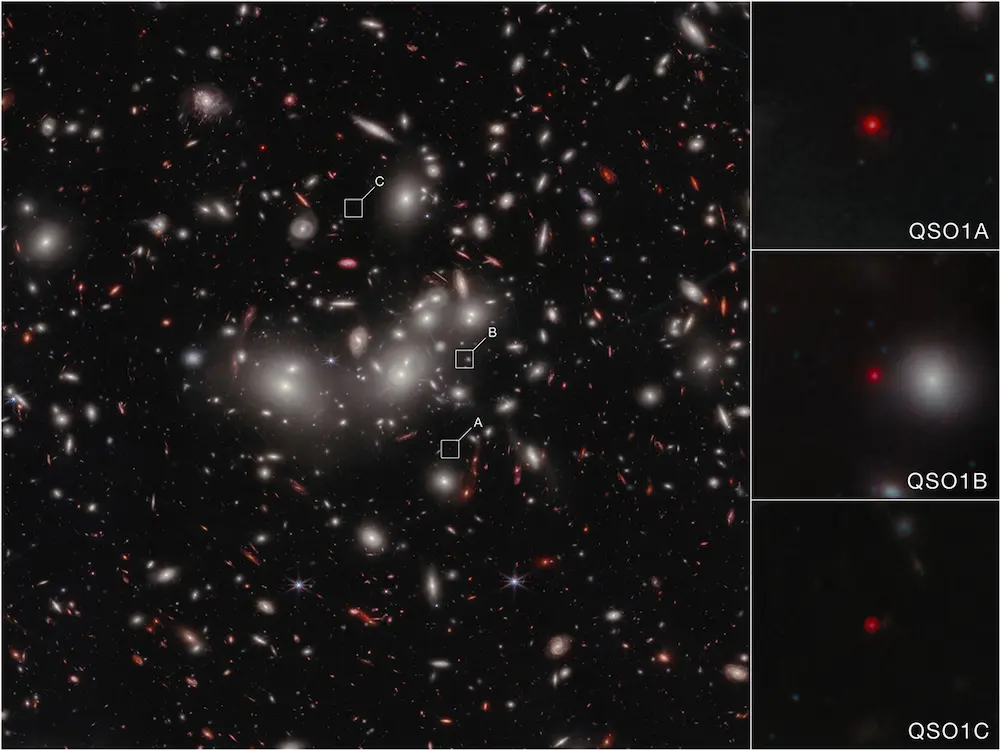
NASA’s James Webb Space Telescope has delivered one of those results that makes the early universe feel even stranger than expected. Astronomers study…
Read more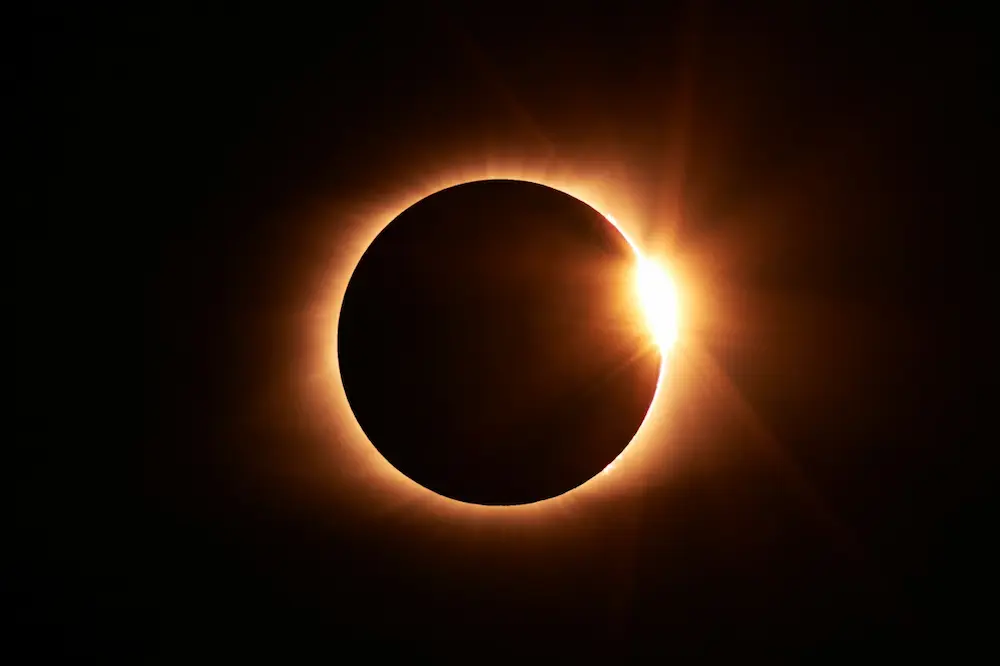
A solar eclipse is one of the most extraordinary sights in the sky: the Moon slips between Earth and the Sun, and for a few minutes celestial geometry becomes something you can feel with your own eyes and skin. For anyone searching for the essentials, the first thing to know is simple. A solar eclipse happens only when the Sun, Moon and Earth line up closely enough for the Moon’s shadow to fall on Earth. Yet that elegant alignment produces very different experiences depending on where you stand.
NASA’s eclipse resources make clear that eclipses are both predictable and surprisingly local. One place may see the Sun fully covered, while another sees only a bite taken from the solar disc. That is why eclipse maps, path tables and city-based visibility tools matter so much: they turn a rare global event into a practical viewing plan.
Just as importantly, safe viewing depends on the eclipse type. During a partial or annular solar eclipse, and during the partial phases before and after totality in a total solar eclipse, you must use proper solar protection. Only during the brief total phase of a total solar eclipse, when the Moon completely hides the Sun’s bright face, is direct viewing without eclipse glasses safe.
The Moon casts different parts of its shadow onto Earth, and those shadow zones define what observers see. In the umbra, the Sun is completely covered and observers experience a total solar eclipse. In the penumbra, only part of the Sun is obscured, producing a partial eclipse. When the Moon is too far away in its orbit to cover the Sun fully, its shadow creates the antumbra, and observers there see an annular eclipse: a brilliant ring of sunlight around the Moon’s silhouette.

That geometry explains why eclipses are rare for any given town or city. Even when the world gets a solar eclipse, the track of totality or annularity is narrow, while the broader partial phases spread over much larger regions. So why do they not happen every month at new Moon? Because the Moon’s orbit is tilted relative to Earth’s orbit around the Sun. The three bodies must line up near the points where those orbital planes intersect, known as nodes.
NASA’s catalogues show just how precise — and how predictable — these alignments are. The agency hosts decade tables, path maps, a Five Millennium Catalog of Solar Eclipses covering -1999 to +3000, a World Atlas of Solar Eclipse Paths, a Five Millennium Solar Eclipse Search Engine, and a Javascript Solar Eclipse Explorer that calculates eclipse visibility from individual cities. The older NASA Goddard Space Flight Center eclipse site remains a valuable archive, though NASA notes that newer future-eclipse updates now live at science.nasa.gov/eclipses.
| Shadow zone | What you see | Eye protection needed? |
|---|---|---|
| Penumbra | Partial solar eclipse | Yes, at all times |
| Umbra | Total solar eclipse | Only removable during totality |
| Antumbra | Annular solar eclipse | Yes, at all times |
There are four recognised solar eclipse types in NASA’s catalogues: total, annular, partial and hybrid. Total eclipses are the most dramatic because the Sun’s bright face disappears completely. Annular eclipses never reach totality, so the Sun remains a blazing ring. Partial eclipses are more common, but they do not deliver the deep twilight of totality. Hybrid eclipses are the rarest of the four, shifting between total and annular along different parts of the eclipse track.
The decade table for 2011 to 2020 shows that this variety is not theoretical. It includes partial eclipses across Europe, Africa, Asia and the Americas; total eclipses such as 2015 March 20, 2016 March 09, 2017 August 21, 2019 July 02 and 2020 December 14; annular events including 2012 May 20, 2016 September 01, 2017 February 26, 2019 December 26 and 2020 June 21; and a hybrid eclipse on 2013 November 03. Some central eclipses lasted only seconds, while others stretched past four or even six minutes, depending on geometry.
That changing duration is part of the fascination. Not all eclipses are created equal, and not all are equally accessible. A total eclipse crossing land, as in the United States in 2017 or Chile and Argentina in 2019, naturally attracts huge attention. Others arc across remote ocean, Antarctica or sparsely populated regions, turning them into events followed more closely on maps than in person.
For planning, NASA’s most useful tools are the path tables for central eclipses, the 20-year Google-map path collections, the atlas maps spanning 20-year intervals, and the searchable five-millennium database. Together, they answer the question every eclipse chaser eventually asks: where exactly do I need to be?
This is the non-negotiable part. NASA states that it is never safe to look directly at the bright Sun without specialised eye protection, except during the brief total phase of a total solar eclipse. Regular sunglasses are not safe, however dark they seem. If you are watching a partial or annular eclipse directly, or the partial phases of a total eclipse, use safe solar viewing glasses or a handheld solar viewer that ought to comply with the ISO 12312-2 international standard.

Inspect eclipse glasses before use and discard them if they are torn, scratched or damaged. Children should be supervised. And here is the mistake NASA repeatedly warns against: do not look at the Sun through a camera lens, binoculars or a telescope while wearing eclipse glasses or using a handheld viewer. The concentrated sunlight can burn through the filter and cause severe eye injury. Optical devices need their own proper solar filters mounted on the front of the instrument.
No eclipse glasses? Indirect viewing still works beautifully. NASA recommends projection methods such as a pinhole projector, including a simple box setup that projects the Sun’s crescent image onto white paper. Even everyday objects such as a colander can cast multiple crescent Suns onto the ground during the partial phases. Isn’t that one of the loveliest things about eclipses — that serious celestial mechanics can suddenly appear in kitchenware shadows?
Finally, remember that eclipse days are often long days outdoors. NASA also advises sunscreen, a hat and protective clothing, because you may remain in direct sunlight for hours while waiting for the main event. For the latest future-eclipse information, safety guidance and official maps, NASA now directs readers to science.nasa.gov/eclipses, while the older Goddard site remains an exceptional archive for records, catalogues and historical eclipse planning.
AstronomyNASA’s James Webb Space Telescope has delivered one of those results that makes the early universe feel even stranger than expected. Astronomers study…
Read more Astronomy
Neptune’s strange moon system may have just become even more fascinating. A new peer-reviewed study published on 20 May in Science Advances argues tha…
Read more Astronomy
The search for the universe’s first stars has always been one of astronomy’s most tantalising pursuits. Now the James Webb Space Telescope has pushed …
Read more