 Astronomy
James Webb may have found a black hole older than its galaxy
NASA’s James Webb Space Telescope has delivered one of those results that makes the early universe feel even stranger than expected. Astronomers study…
Read more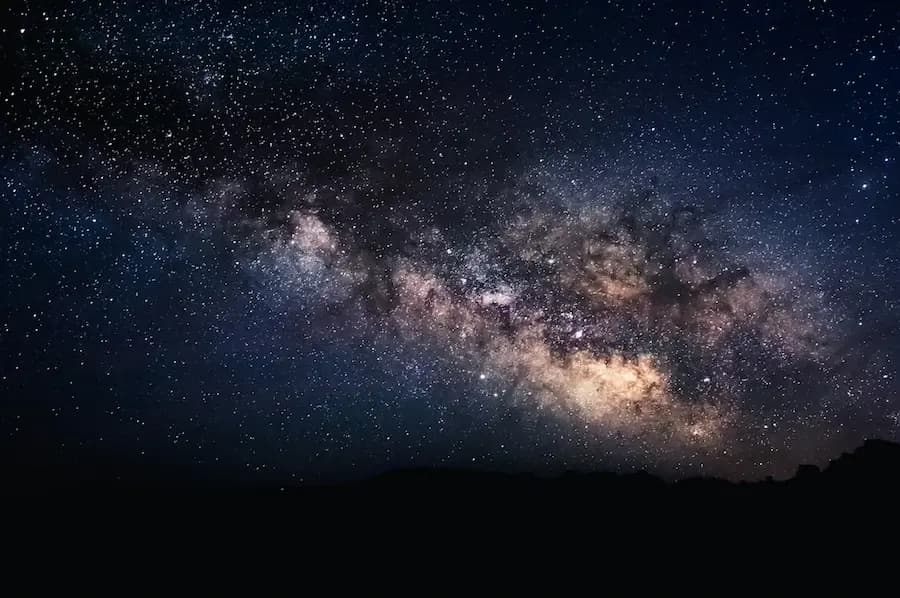
Look up on a clear night and the puzzle seems almost too simple: if the universe contains staggering numbers of stars and galaxies, why is the sky mostly black? This question, often framed as Olbers’ paradox, has fascinated astronomers for centuries because it cuts straight to the nature of the cosmos itself. If space were filled with stars in every direction, shouldn’t the whole sky blaze like the surface of the Sun?
The short answer is no — but only because the universe is not the kind of place that paradox assumed. Modern cosmology shows that the cosmos is not static, not eternal in the old sense, and not unchanged through time. It has a finite age and it is expanding. Those two facts reshape the entire question, and they explain why darkness dominates the space between brilliant islands of light.
That also means the common explanation — that space is dark because there is “no air” there — misses the real point. It is true that, without an atmosphere, there is no broad scattering of sunlight to make a sky glow blue as it does on Earth. But that only explains why the background stays dark between light sources. It does not answer the deeper cosmological question of why the whole universe is not saturated with starlight. For that, we need to go much further.
Olbers’ paradox rests on a set of assumptions that now look familiar precisely because they are wrong: an infinite universe, filled more or less uniformly with stars, existing forever and remaining broadly static. In such a cosmos, every line of sight should eventually land on the surface of a star. Distant stars would be dimmer individually, yes, but there would be so many of them that their combined light should make the sky bright everywhere.
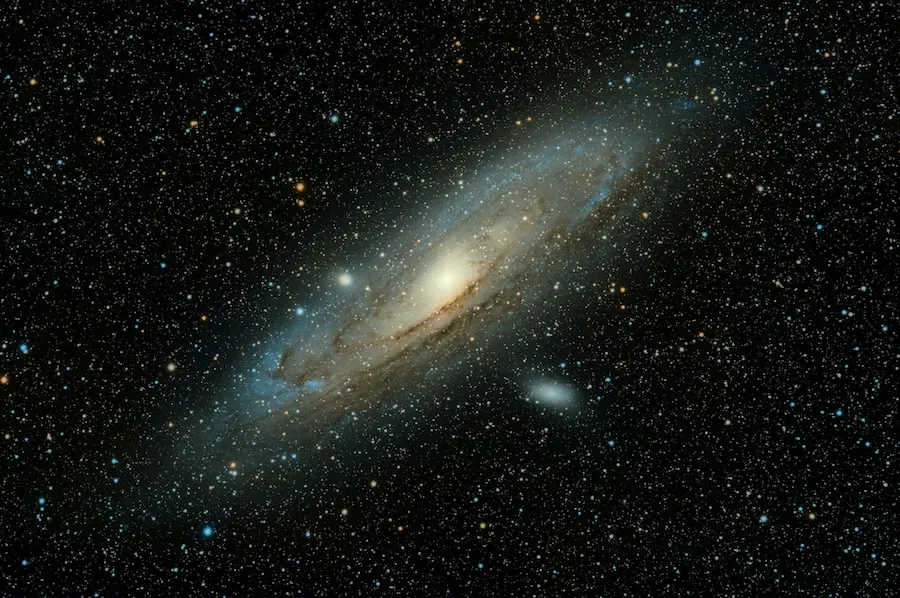
Why doesn’t that happen? The most important reason is that the universe has a finite age. Light travels at a finite speed, so we can only see as far as light has had time to reach us. That immediately limits how much of the universe is visible. There are not infinitely many star-filled regions contributing visible light to our sky, because beyond a certain distance, their light simply has not arrived yet.
The second major reason is expansion. As space expands, light travelling across the cosmos gets stretched to longer wavelengths — a process known as redshift. Imagine the peaks of a light wave being pulled farther apart as the universe grows. Over immense distances, radiation that may once have been emitted at visible wavelengths is shifted into the infrared or even the microwave part of the spectrum, beyond what human eyes can detect.
| Idea | Old assumption | Modern understanding |
|---|---|---|
| Age of the universe | Eternal | Finite age, so not all light has arrived |
| Cosmic behaviour | Static | Expanding, stretching light to longer wavelengths |
| Brightness of distant sources | Adds up to a bright sky | Dimmed by distance and cosmic expansion |
| What fills the sky | Visible starlight everywhere | Mostly darkness, with faint diffuse backgrounds |
This is where the story becomes even more beautiful. The sky is not truly dark in an absolute sense; it is dark to our eyes. The expanding universe not only limits and weakens visible starlight, it also shifts ancient radiation out of the visible band altogether. In other words, the cosmos still glows — just mostly in wavelengths we cannot perceive directly.
The clearest example is the cosmic microwave background, or CMB. This faint microwave glow fills the entire sky and is the cooled, stretched remnant of the hot early universe. So when we ask why the universe is not ablaze, the answer is almost teasingly subtle: in a sense, it is. It is just not shining in visible light. The CMB is the afterglow of a much hotter cosmic past, redshifted over billions of years until it became microwave radiation.
Expansion also causes a form of surface-brightness dimming. Extended objects seen across cosmological distances do not merely look farther away; their light is spread out and weakened by the growth of space itself. That makes the combined background of distant galaxies far fainter than a simple static-universe picture would suggest. What seems at first like a paradox turns out to be a clue that the universe evolves, ages and changes its appearance with time.

It is still useful to separate the everyday explanation from the cosmic one. Space lacks an atmosphere, so there is no air to scatter light across the sky. That is why astronauts see a black background even when the Sun is shining fiercely. Bright objects in direct sunlight can be dazzling, while the vacuum between them remains dark. But again, that does not solve Olbers’ paradox; it only explains why local skies in space do not glow the way Earth’s does.
Dust is sometimes invoked as a possible answer, but it does not hold up. If dust absorbed all that missing starlight, it would warm up and reradiate the energy. Over time, it too would glow. Dust can block and reshape light locally, yet it cannot make the paradox disappear on its own.
And the universe is not perfectly black between stars either. There are faint diffuse backgrounds: zodiacal light from sunlight scattered by dust in the Solar System, the extragalactic background light built from the accumulated glow of galaxies, and the cosmic microwave background itself. These are subtle, ghostly illuminations rather than a uniform blaze, but they matter because they show that darkness in space is not emptiness in the simple sense.
What began as a deceptively ordinary question — why is the night sky dark? — opened onto one of the deepest insights in astronomy. The darkness above us is evidence that the universe has a history. Light has not had forever to travel. Space itself stretches what does travel. And beyond the stars we can see, the cosmos still shines in ancient, invisible wavelengths, waiting for our instruments to reveal it.
AstronomyNASA’s James Webb Space Telescope has delivered one of those results that makes the early universe feel even stranger than expected. Astronomers study…
Read more Astronomy
Neptune’s strange moon system may have just become even more fascinating. A new peer-reviewed study published on 20 May in Science Advances argues tha…
Read more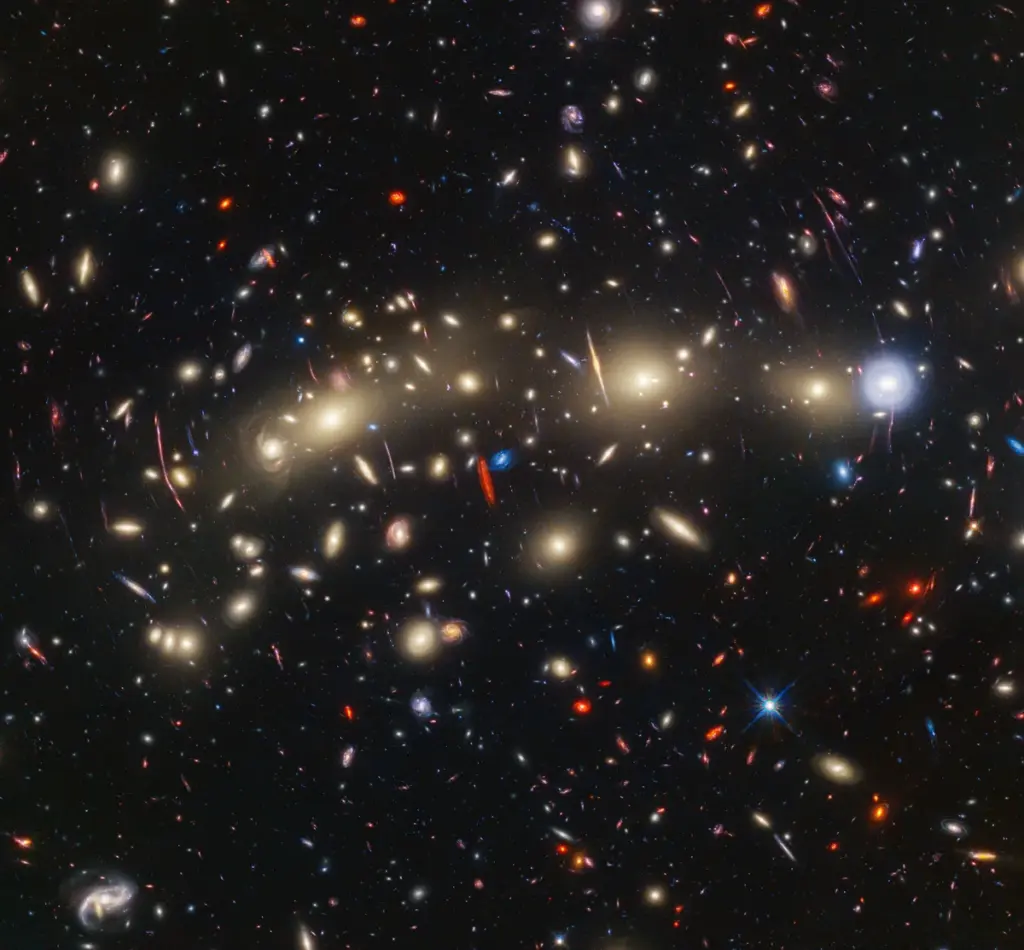 Astronomy
The search for the universe’s first stars has always been one of astronomy’s most tantalising pursuits. Now the James Webb Space Telescope has pushed …
Read more