 Astronomy
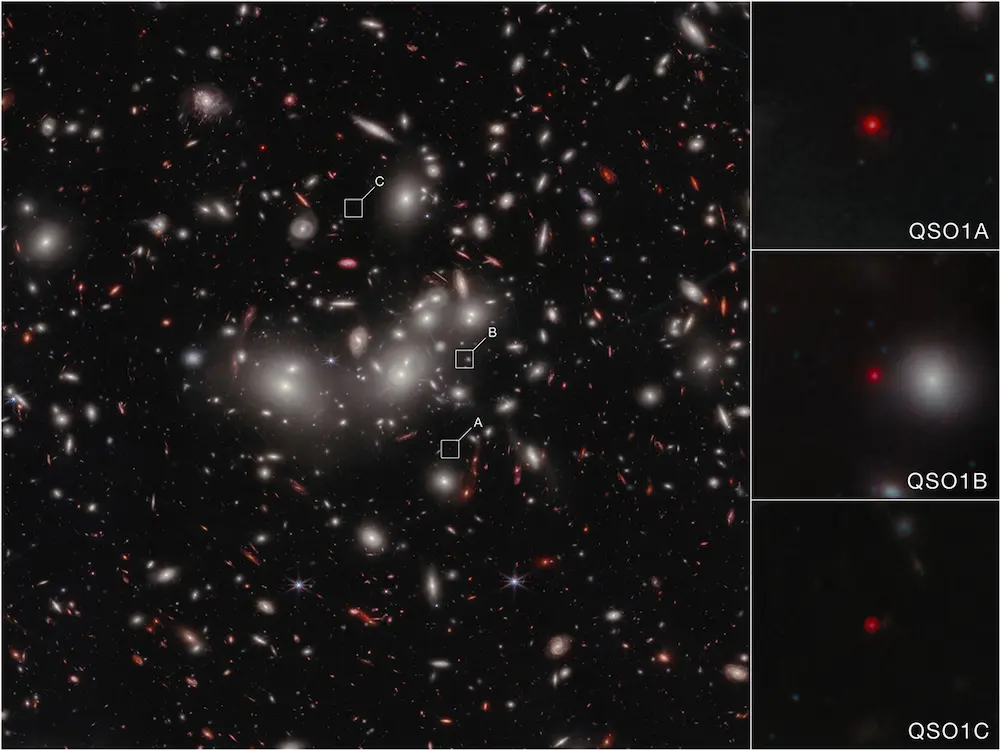
James Webb may have found a black hole older than its galaxy
NASA’s James Webb Space Telescope has delivered one of those results that makes the early universe feel even stranger than expected. Astronomers study…
Read more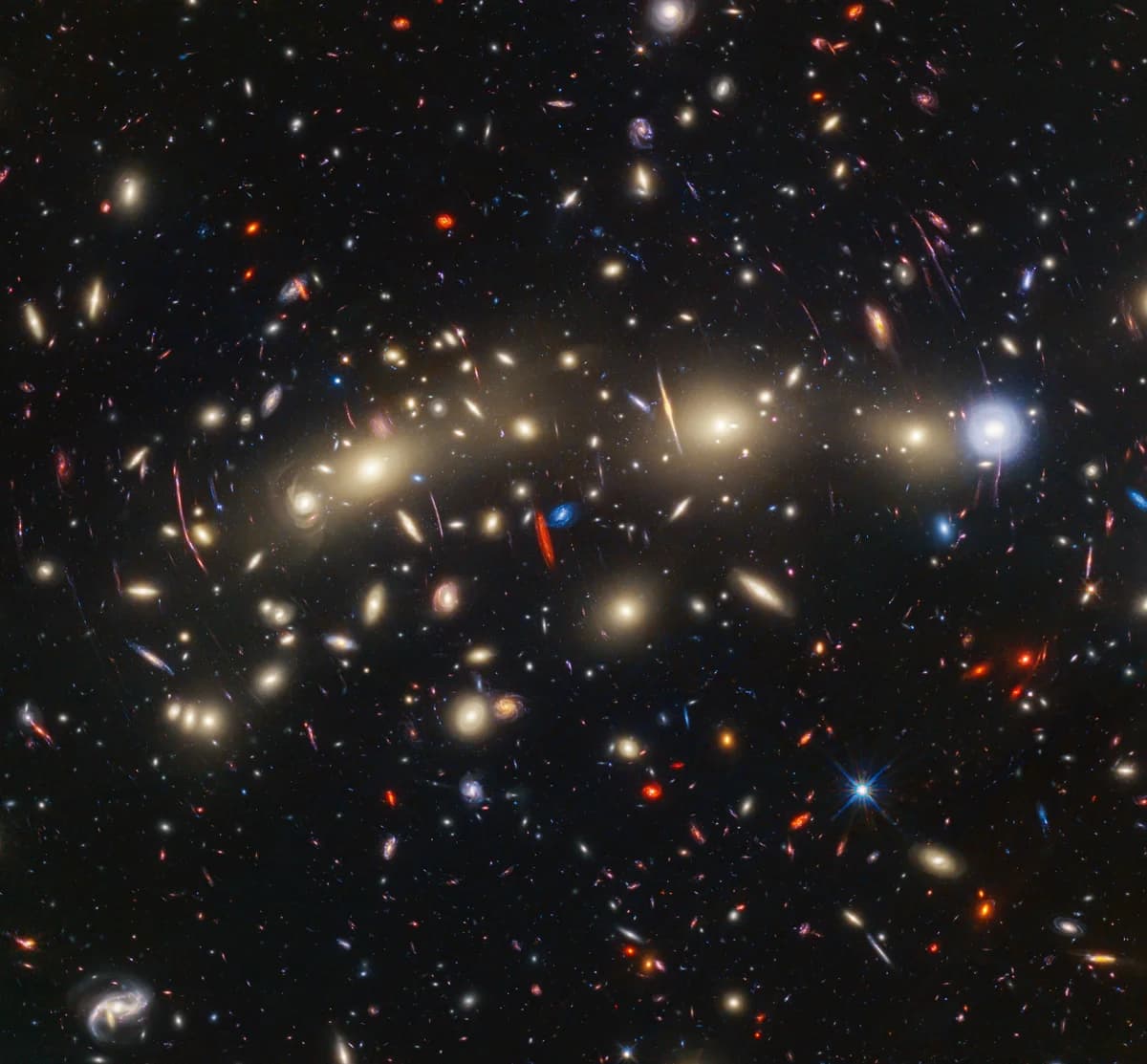
The search for the universe’s first stars has always been one of astronomy’s most tantalising pursuits. Now the James Webb Space Telescope has pushed that hunt a little further, with new observations of a tiny, chemically primitive galaxy called LAP1-B and separate clues from the ancient galaxy GN-z11 pointing towards the same prize: the elusive fingerprints of Population III stars, the first generation of stars to ignite after the Big Bang.
That does not mean astronomers have definitively seen those stars. But the new evidence is unusually compelling because it comes from objects that appear startlingly unevolved, still close to the primordial mix of hydrogen and helium from the Big Bang. In other words, these are the kinds of places where first-star signatures ought to survive.
For anyone wondering why this matters, the answer is beautifully simple. Population III stars are thought to have forged the first heavy elements, transforming a young cosmos made almost entirely of hydrogen and helium into one capable of building later stars, planets and, eventually, us. So when JWST finds a galaxy that looks like a preserved fragment from that era, who would not pay attention?
LAP1-B was seen as it existed about 800 million years after the Big Bang, and it only became observable in such detail because the massive galaxy cluster MACS J0416.1-2403 acts as a gravitational lens, amplifying its faint light by roughly a factor of 100. The object had been identified earlier through work involving the European Southern Observatory’s Very Large Telescope and the Hubble Space Telescope, but JWST’s deeper spectroscopy changed the picture.
Using spectroscopy, astronomers broke the galaxy’s light into its component wavelengths and read its chemical signature. What emerged was striking: LAP1-B appears to contain gas dominated by primordial hydrogen and helium, with only meagre traces of oxygen. That makes it an extremely metal-poor system in astronomical terms, because astronomers call every element heavier than helium a “metal”.

The spectrum also showed an unexpectedly strong carbon signal, which researchers interpreted as a possible sign that some very early stars ended their lives in weak supernova explosions. In that scenario, carbon-rich outer layers are expelled, while deeper oxygen-rich layers fall into a newly formed black hole. The result would be exactly the kind of odd, uneven enrichment a first-generation stellar population might leave behind.
Just as important, the galaxy’s gas seems to be lit by highly energetic radiation consistent with what theorists expect from Population III stars. Yet JWST did not directly detect the stars themselves. That absence matters, too: it let the team place an upper limit on the stellar mass, suggesting LAP1-B hosts no more than about 3,300 solar masses of stars. For comparison, the Milky Way contains around 100 billion solar masses in stars.
| Object | Epoch seen | Key clue | Why it matters |
|---|---|---|---|
| LAP1-B | About 800 million years after the Big Bang | Mostly hydrogen and helium, very little oxygen, unusual carbon | Looks like a chemically primitive building block of larger galaxies |
| GN-z11 / Hebe region | Roughly 430 million years after the Big Bang | Helium-rich gas and doubly ionized helium emission, with no metals detected | Suggests an extremely hard radiation source, potentially Population III stars |
Researchers also found that LAP1-B’s gas is moving fast enough that the galaxy would disperse without the grip of dark matter, reinforcing the idea that this is a tiny, early galactic building block rather than a mature system. In that sense, “cosmic fossil” is more than a catchy phrase: it captures the possibility that LAP1-B resembles the ancestors of today’s ultrafaint dwarf galaxies.
A second line of evidence comes from GN-z11, one of the brightest galaxies known from the very early universe. With JWST’s Near Infrared Spectrograph, astronomers examined a nearby source named Hebe, less than 10,000 light-years from GN-z11, and identified a faint signal interpreted as doubly ionized helium.
This is where the story becomes especially interesting. Helium-II emission requires an intense, hard radiation field capable of stripping two electrons from helium atoms. That is exactly the kind of extreme environment expected around very hot, metal-free or nearly metal-free stars. Add the apparent lack of heavy-element lines, and the case for a primordial stellar population becomes much stronger.
Even so, astronomers are not rushing to declare victory. Helium-II can also be generated by other powerful engines, including accreting black holes or shock-heated gas. The central debate is not whether the signal is real, but what exactly produced it. That is why researchers have described these findings as the strongest clues yet, rather than conclusive proof.
Right now, the weight of evidence comes from chemistry and radiation rather than direct portraits of individual stars. In both LAP1-B and the GN-z11 system, JWST has found environments that look unusually close to primordial conditions, along with spectral features that fit long-standing theoretical expectations for Population III stars.
Still, the community remains careful. Independent experts have called LAP1-B compelling and potentially a bridge between pristine stellar populations and later chemically enriched galaxies, but they also stress that the interpretation needs corroboration. That caution is not hesitation for its own sake; it reflects how difficult it is to study such faint, distant objects at the edge of observability.
The next step is straightforward in principle, if not in practice: deeper observations. Astronomers want more sensitive JWST spectroscopy to hunt for faint metal lines that could distinguish true primordial stars from more ordinary, if still extreme, stellar populations. Further follow-up may also help separate stellar emission from black hole activity.
For now, the most exciting conclusion is also the most measured one. JWST has not yet delivered an unambiguous sighting of the first stars, but it has found some of the best places to look and some of the clearest fingerprints ever reported. After decades of theory and indirect hints, that alone feels like a remarkable step towards the moment when cosmic dawn finally comes into focus.
AstronomyNASA’s James Webb Space Telescope has delivered one of those results that makes the early universe feel even stranger than expected. Astronomers study…
Read more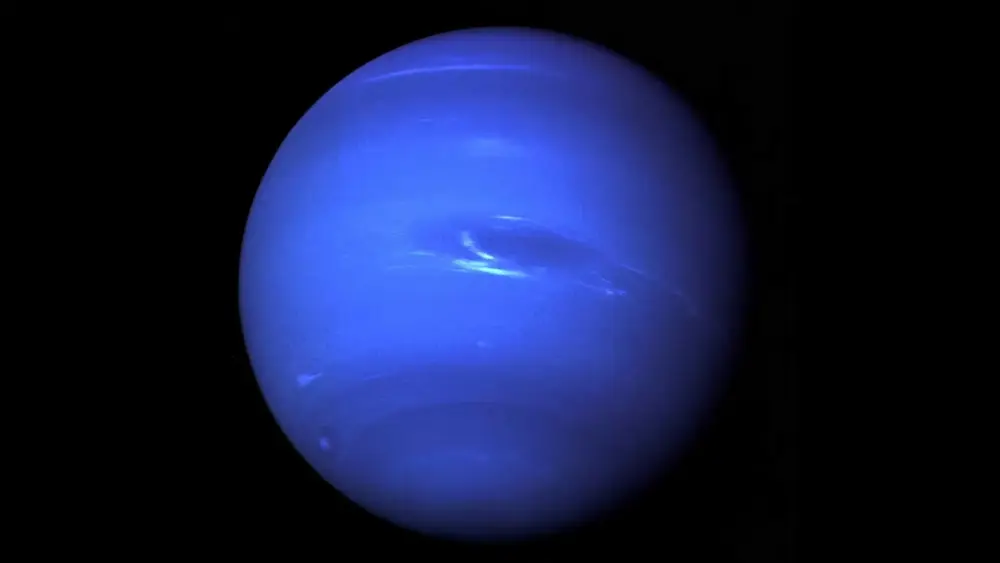 Astronomy
Neptune’s strange moon system may have just become even more fascinating. A new peer-reviewed study published on 20 May in Science Advances argues tha…
Read more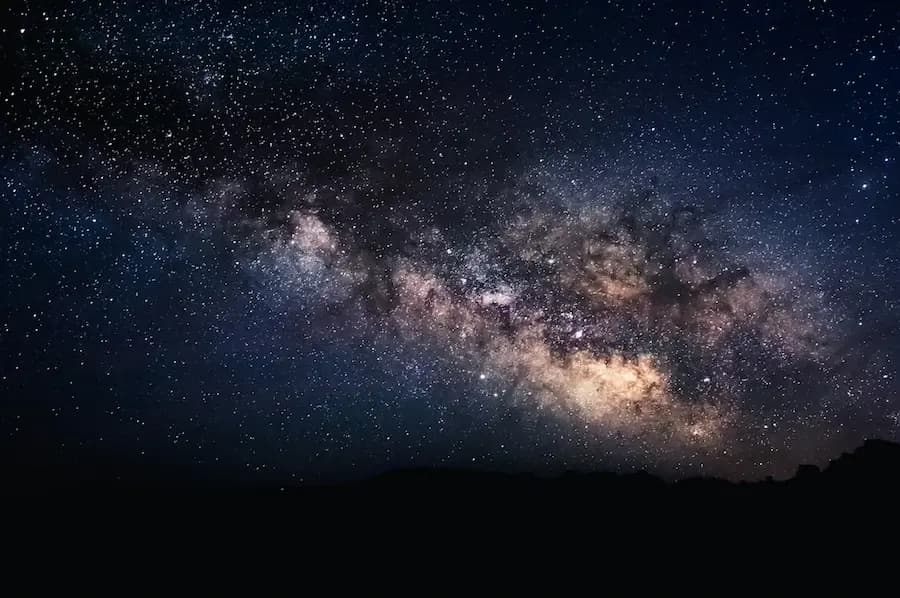 Astronomy
Look up on a clear night and the puzzle seems almost too simple: if the universe contains staggering numbers of stars and galaxies, why is the sky mos…
Read more