 News
NewsNorthern Lights Alert Upgraded Across 23 States
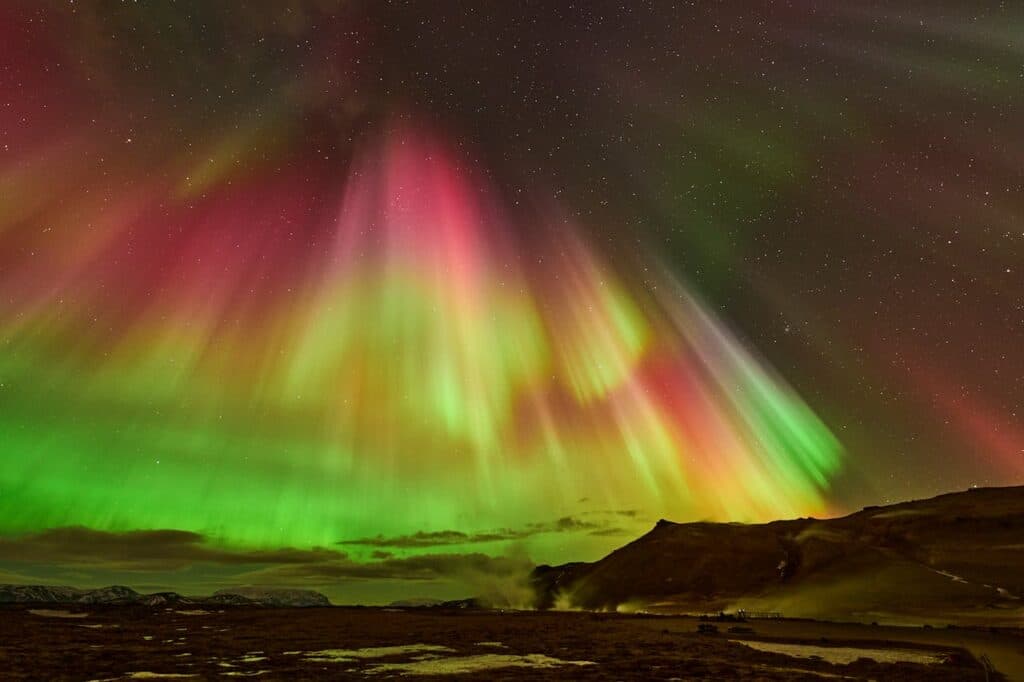
The National Oceanic and Atmospheric Administration’s Space Weather Prediction Center upgraded its aurora outlook for Thursday, 4 June into Friday, 5 …
Read more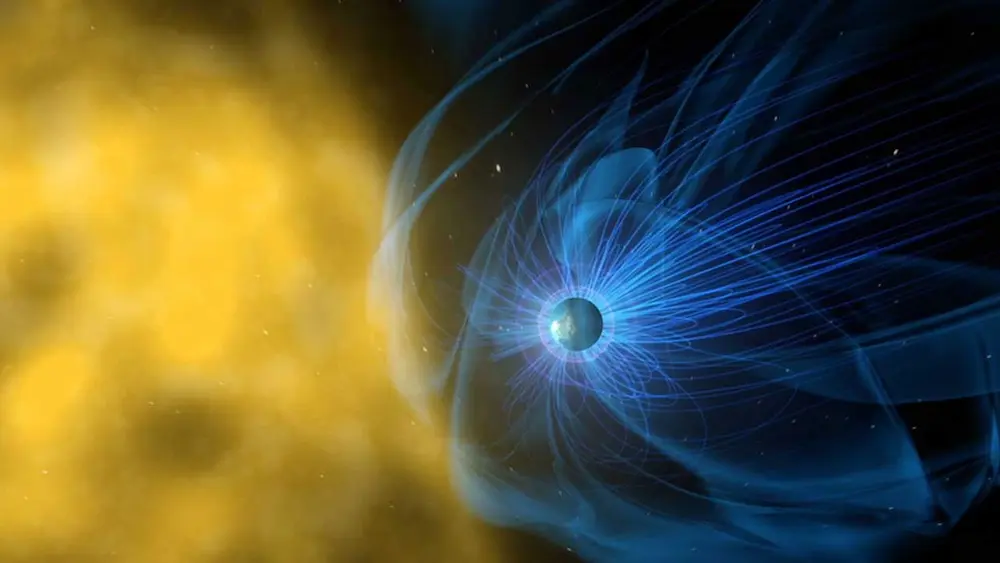
The Solar wind Magnetosphere Ionosphere Link Explorer, better known as SMILE, has now launched, opening a fresh chapter in space weather research just as the Sun sits near a more active phase. The joint mission by the European Space Agency and the Chinese Academy of Sciences is designed to do something researchers have wanted for decades: watch Earth’s magnetic shield as a whole system, not merely as a collection of local measurements.
That distinction is the heart of the mission. Solar storms and the steady solar wind can buffet Earth’s magnetosphere, triggering auroras and, in stronger cases, disturbances that affect satellites, communications and power systems. Yet the magnetosphere is vast and invisible. How do you understand a protective bubble you cannot directly see? SMILE’s answer is to turn it into an observable target, capturing global views in soft X-rays and ultraviolet light while also sampling the surrounding plasma and magnetic environment.
SMILE lifted off on a Vega-C rocket from Europe’s Spaceport in French Guiana at 04:52 BST / 05:52 CEST on 19 May 2026. According to ESA, first contact came via the agency’s New Norcia ground station in Australia, and the spacecraft’s solar panels deployed shortly afterwards, confirming a successful start to the mission.
SMILE’s most distinctive tool is its Soft X-ray Imager, built in Europe, which will produce global soft X-ray views of key frontier regions where the solar wind meets Earth’s magnetic defences. These include the bow shock, the magnetopause and the cusps, where solar particles can more directly funnel towards the upper atmosphere. The X-rays come from charge-exchange processes, allowing the mission to trace where the interaction is happening rather than infer it indirectly.
That perspective is paired with the Ultraviolet Imager, which will observe the auroral oval and track how energy is deposited into Earth’s upper atmosphere. ESA says SMILE will be able to watch the northern lights continuously for up to 45 hours at a time, giving scientists an unusually sustained view of how disturbances ripple from the magnetosphere into the ionosphere.

Two in-situ instruments complete the picture: a magnetometer and an ion analyser, both provided by the Chinese Academy of Sciences. These will measure local magnetic fields and particles around the spacecraft, anchoring the dramatic global imagery in direct physical measurements. Together, the four instruments should allow scientists to connect changes in the solar wind with changes in Earth’s magnetic environment in near real time.
| SMILE mission snapshot | Detail |
|---|---|
| Mission partners | European Space Agency and Chinese Academy of Sciences |
| Launch | 19 May 2026, 04:52 BST / 05:52 CEST, on Vega-C from French Guiana |
| Main imaging instruments | Soft X-ray Imager and Ultraviolet Imager |
| In-situ instruments | Magnetometer and ion analyser |
| Orbit extremes | About 121,000 km above the North Pole and 5,000 km above the South Pole |
| Routine science | Expected to begin in July after commissioning and calibration |
| Nominal mission duration | Three years |
SMILE’s orbit is as carefully chosen as its instruments. Over the next month after launch, ESA said the spacecraft would raise its altitude through 11 engine burns, eventually reaching an extremely elliptical orbit. At its highest point it will travel to about 121,000 kilometres above the North Pole, while its low point will bring it to around 5,000 kilometres above the South Pole.
This geometry matters because it lets the spacecraft linger high above the northern polar region, where it can keep the dayside magnetosphere and auroras in view for long stretches. On southern passes, data can be returned efficiently to scientists on the ground, including via the Bernardo O’Higgins research station in Antarctica mentioned in pre-launch coverage. That long, unbroken view is exactly what earlier missions often lacked: many spacecraft sampled the magnetosphere brilliantly, but only from one point at a time.
ESA says the mission’s data collection will begin in earnest in July, once booms have been deployed, camera covers opened and instrument health checks completed. The nominal mission length is three years, with the possibility of longer operations if the spacecraft remains in good condition.

SMILE is not an operational warning satellite, and it is not a Sun-watching mission in the mould of solar observatories. Its focus is Earth: specifically, how our planet’s magnetic environment reacts when streams of charged particles and stronger eruptions from the Sun arrive. That may sound subtle, but for space weather science it is a major shift.
Near solar maximum, when solar activity tends to be more frequent and intense, the need for better models becomes sharper. Coronal mass ejections can cross the space between the Sun and Earth in as little as one or two days, and severe geomagnetic storms can disturb modern infrastructure in ways the 19th century never had to confront. Satellites, astronauts and communication systems all sit much closer to the problem than telegraph lines once did.
What SMILE adds is the missing global context. Missions that take local measurements remain indispensable, but they cannot by themselves show how an entire magnetic boundary flexes, compresses and reconnects under solar forcing. By linking soft X-ray images of the magnetosphere with ultraviolet views of auroras and direct measurements of particles and fields, SMILE should help researchers test and improve physics-based models of space weather.
There is also a broader significance in the mission’s structure. ESA and the Chinese Academy of Sciences jointly selected, designed, implemented, launched and will operate SMILE, making it a rare example of deep international cooperation in space science. Still, the real story is scientific: after decades of treating Earth’s magnetic shield as an abstract protective bubble, we now have a spacecraft built to watch that shield in action.
NewsThe National Oceanic and Atmospheric Administration’s Space Weather Prediction Center upgraded its aurora outlook for Thursday, 4 June into Friday, 5 …
Read more News
NewsNASA’s James Webb Space Telescope has captured something remarkably rare: a detailed chemical fingerprint from an object that came from beyond our Sol…
Read more News
NewsTwo Roscosmos cosmonauts stepped back inside the International Space Station on 27 May 2026 after a tightly choreographed spacewalk that blended orbit…
Read more