 Explainers
What Is the Milky Way Galaxy? Everything You Need to Know
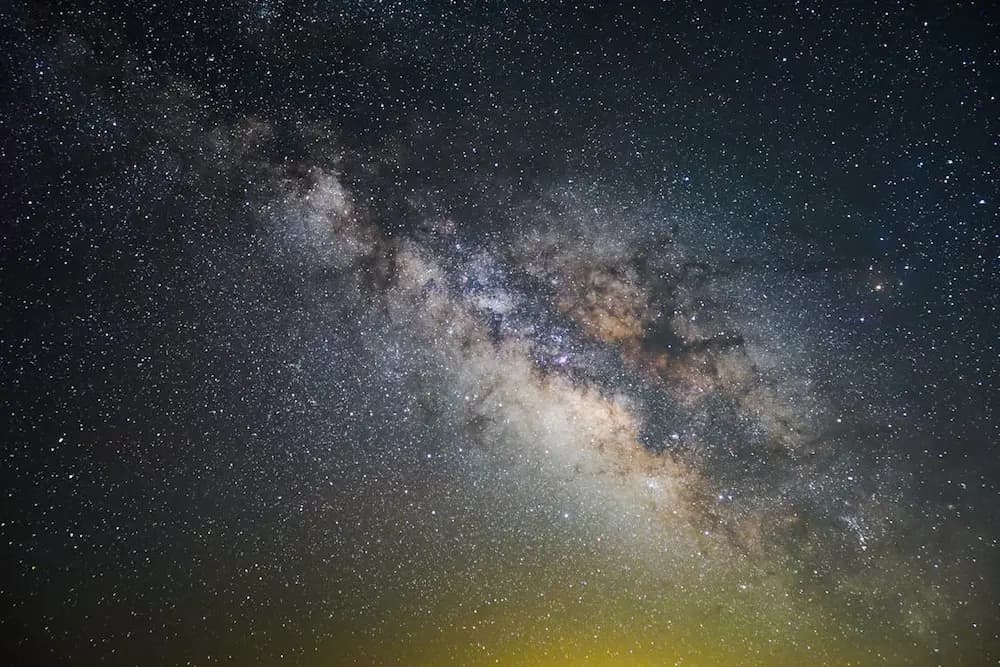
We live inside a galaxy so large that no one can step back and photograph it in a single frame. That is the central challenge of Milky Way astronomy: …
Read more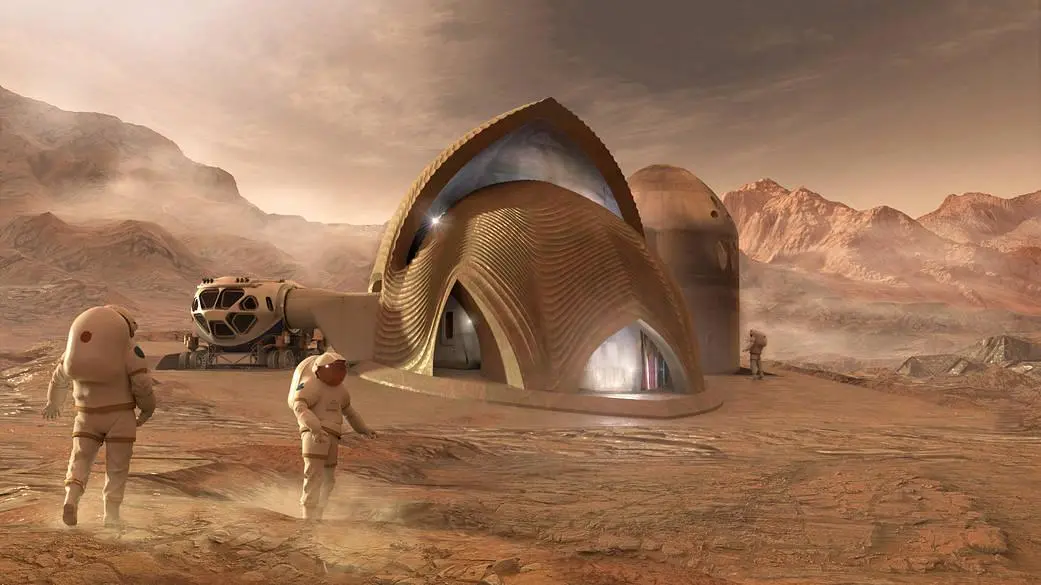
Sending astronauts to Mars is no longer just a question of rockets and ambition. The harder part comes after launch: surviving the cruise through deep space, landing the mass of an entire outpost on the surface, and then keeping a crew alive and productive in a place with a thin carbon dioxide atmosphere, intense radiation and no ready-made infrastructure. That is why the most useful way to think about a first Mars base is as a mission architecture challenge.
Mars remains the most practical distant target for human exploration because it combines scientific richness with usable local resources. Its atmosphere is mostly carbon dioxide, a potential feedstock for making oxygen, while buried ice offers the prospect of water for drinking, industry and eventually fuel production. In that sense, the familiar “Moon to Mars” idea is less a slogan than a logic chain: use nearer missions to retire risk, test hardware and learn how humans operate far from Earth before committing crews to the Red Planet.
The pathfinders already exist. NASA’s Artemis framework is designed as a proving ground for long-duration exploration operations. On Mars itself, NASA’s Curiosity rover and Perseverance rover have provided something even more valuable than inspiration: hard measurements and real technology demonstrations. If humans are to live there, these robotic scouts are showing where the biggest obstacles really lie.
The voyage is not a short sprint. A crew would spend months in deep space, beyond the protective cocoon of Earth’s magnetic field. One of the clearest warnings comes from the Radiation Assessment Detector on NASA’s Mars Science Laboratory Curiosity rover, which began detailed measurements on the martian surface on 7 August 2012. Over roughly 300 days of observations during solar maximum, the instrument characterised the radiation environment astronauts would face after landing.

The editorial brief’s key figure captures the scale of the issue: about 0.67 millisieverts per day on the martian surface. That matters because surface operations are only part of the exposure budget; the journey there and back adds still more. Curiosity’s measurements were explicitly framed as an anchor for assessing hazards to future human missions, while also helping scientists model how radiation affects the shallow subsurface, microbial survival and the preservation of organic biosignatures.
So how do you reduce a danger that cannot simply be switched off? One answer is speed. The less time a crew spends in interplanetary space, the lower the cumulative dose. That is why studies of nuclear thermal propulsion and solar-electric propulsion keep resurfacing in serious Mars planning. Faster transfers would not solve radiation outright, but they could chip away at one of the mission’s most stubborn constraints.
| Mission challenge | What current pathfinders show |
|---|---|
| Surface radiation | Curiosity’s Radiation Assessment Detector measured the martian radiation environment, about 0.67 mSv/day in the briefed figure |
| Using local atmosphere | MOXIE demonstrated oxygen production from Mars air |
| Closed-loop survival systems | ESA’s MELiSSA develops regenerative life-support concepts that recycle air, water and waste |
| Exploration operations | Artemis serves as the near-term proving ground for long-duration missions and risk reduction |
Even if the transit problem is eased, Mars poses another brutal test: entry, descent and landing with cargo masses far beyond what robotic missions have delivered so far. A human expedition cannot arrive carrying only a compact science payload. It needs habitats, power systems, surface mobility, consumables and safety margins measured not in kilograms but in tens of tonnes.
That changes the sequence of exploration. A first crewed base would almost certainly have to be built in stages, with power, shelters and stores delivered ahead of the astronauts. Pre-deployment is not just prudent; it is foundational. If a habitat, power unit or critical supply fails after the crew arrives, rescue is not a realistic option in the way it might be in low Earth orbit.

This is where the Moon becomes relevant again. Artemis-era operations can help validate procedures for staging, cargo assembly and long-duration surface work. Yet Mars remains less forgiving. Its atmosphere is thick enough to complicate descent, but too thin to make landing heavy payloads easy. Dust, rugged terrain and long communication delays mean the surface base must be designed for autonomy from the beginning.
Then there is power. A Mars outpost cannot rely on fair weather. Robust, year-round energy is essential for life support, thermal control, communications and resource processing, which is why surface fission systems are so often part of serious base concepts. Solar power may play a role, but on Mars the margin for prolonged weakness is narrow.
The most encouraging progress has come from technologies that treat Mars not only as a hazard but also as a source of raw materials. NASA’s MOXIE experiment showed that oxygen can be produced from the martian atmosphere, a striking demonstration because oxygen is needed both for breathing and, eventually, for propellant. Turning local carbon dioxide into something astronauts can use is the kind of step that makes a base feel less like fantasy and more like engineering.
Water is the other pillar. Buried ice is central to the case for a sustained presence, but prospecting matters: explorers will need reliable knowledge of where accessible reserves are and how difficult they are to extract. Once obtained, that water becomes the backbone of habitation, hygiene, agriculture and industrial chemistry.

Closed-loop life support is equally crucial. ESA’s MELiSSA programme has long pursued regenerative systems that recycle air, water and waste, exactly the sort of bioregenerative approach Mars missions will need. On a world where every kilogram launched from Earth carries a huge penalty, discarding useful material is a luxury no base can afford.
And yet the final gaps are sobering. Shielding strategies must protect crews from radiation on the surface as well as in transit. Dust and terrain hazards can threaten machinery and human health. Partial gravity remains an unresolved medical question for long stays. What happens to the body after months or years in Mars’s weaker gravity? We do not yet know enough.
That is the real picture of a first Mars base: not one breakthrough, but a chain of them. Faster transport, safer landing systems, pre-positioned cargo, dependable power, oxygen from air, water from ice and life support that approaches ecological closure. Piece by piece, the architecture is coming into focus. The wonder of Mars has not diminished, but today it is matched by something just as compelling: a growing toolkit for getting there and staying there.
ExplainersWe live inside a galaxy so large that no one can step back and photograph it in a single frame. That is the central challenge of Milky Way astronomy: …
Read more Explainers
Earth’s spin feels so constant that it is easy to treat it as background scenery rather than one of the defining facts of our planet. Yet the ground b…
Read more Explainers
Astronauts aboard the International Space Station seem to drift effortlessly, as if gravity has somehow been switched off. It is one of the most persi…
Read more