 Space Agencies
Astronaut Requirements by Space Agency 2026
Becoming an astronaut remains one of the most demanding career paths on Earth, and the basic idea has not changed in the Artemis era: space agencies s…
Read more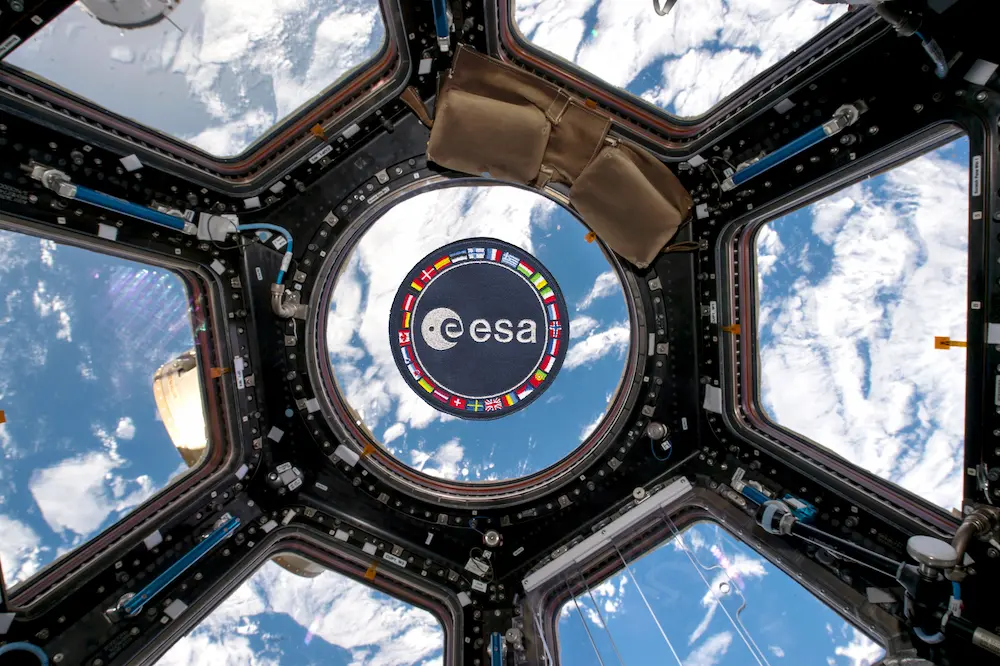
The European Space Agency is Europe’s gateway to space: an intergovernmental organisation created in 1975 to develop a shared space programme for peaceful purposes and to turn that investment into scientific, technological and practical benefits. In plain terms, ESA allows European countries to do together what would be difficult, or impossible, to do alone. That cooperative model is the heart of the agency, whether the goal is probing Jupiter with Juice, tracking asteroids through Hera and planetary defence work, studying the dark Universe with Euclid, or improving life on Earth through navigation and Earth observation.
For anyone searching what ESA actually is, the key point comes first: ESA is not the European Union. The two work closely together, but they are separate organisations with different memberships, legal structures and rules. That distinction matters because ESA includes countries outside the EU, among them the United Kingdom, Norway and Switzerland, and it also works with Canada under a cooperation agreement for some projects.
ESA is headquartered in Paris, while its work is spread across specialised centres in several countries. The agency’s governing body is its Council, where each Member State has one vote regardless of size or contribution. ESA is led by a Director General, and as of the source material that is Josef Aschbacher. Around 3,000 staff worked for the agency as of 2025, spanning scientists, engineers, IT specialists and administrative teams. For 2025, ESA’s budget was €7.68 billion.
ESA’s structure is unusually European in the best sense: shared ambition, distributed expertise and long-term planning. Its Convention was opened for signature in Paris on 30 May 1975 and entered into force on 30 October 1980. Over time, more countries joined, with Slovenia becoming a Member State on 1 January 2025, bringing the total to 23 Member States.
Those Member States are: Austria, Belgium, Czech Republic, Denmark, Estonia, Finland, France, Germany, Greece, Hungary, Ireland, Italy, Luxembourg, the Netherlands, Norway, Poland, Portugal, Romania, Slovenia, Spain, Sweden, Switzerland and the United Kingdom.
ESA also lists Cyprus, Latvia, Lithuania and Slovakia as Associate Members, while Bulgaria, Croatia and Malta have cooperation agreements. Canada holds a distinctive place through a long-standing cooperation agreement that allows participation in some ESA projects. Statuses can evolve, which is why ESA’s own listings remain the reference point.
Funding is split between mandatory and optional programmes. Mandatory activities include the science programme and general budget, funded by all Member States according to gross national product. Optional programmes work differently: each country chooses where to take part and how much to contribute. That may sound bureaucratic, but it is one reason ESA can support everything from astronomy to navigation, launch systems and astronaut training without forcing every country into every project.
| ESA fact | Detail |
|---|---|
| Founded | 1975 |
| Convention in force | 30 October 1980 |
| Headquarters | Paris, France |
| Member States | 23 |
| Staff | Around 3,000 as of 2025 |
| 2025 budget | €7.68 billion |
Another defining feature is ESA’s principle of geographical return, sometimes called industrial return. In essence, the agency aims to place industrial contracts back into Member States at a level broadly corresponding to their contributions. That means ESA is not only a scientific organisation but also a mechanism for strengthening European industry and technical capability.

ESA’s distributed geography tells you a lot about how it functions. ESTEC in Noordwijk, the Netherlands, is the agency’s main research and technology centre and home to satellite project teams and testing facilities. ESOC in Darmstadt, Germany, handles operations, satellite control and data retrieval. ESRIN in Frascati, Italy, focuses on Earth observation. ESAC near Madrid, Spain, hosts scientific operations centres and archives. The European Astronaut Centre in Cologne trains astronauts, while ECSAT in Harwell in the United Kingdom and ESEC in Redu, Belgium, round out the network. ESA also works from liaison offices and global ground stations, and it uses Europe’s Spaceport in French Guiana for launches.
This infrastructure supports one of the broadest space portfolios in the world. In science and exploration alone, ESA’s active mission lineup includes Juice, Euclid, Solar Orbiter, BepiColombo, Cheops and Webb participation. In planetary defence and safety, it works on missions and systems such as Hera, the Flyeye telescope and the Near-Earth Object Coordination Centre. In human spaceflight, it contributes to the International Space Station, the Orion service module and Gateway. In launch and transport, ESA is tied to Ariane, Vega and Space Rider.
Older milestones still shape ESA’s identity too: Giotto at Halley’s Comet, Mars Express, Columbus on the International Space Station, and observatories such as Herschel and Planck. Why does that legacy matter? Because it shows ESA is not a single-mission agency but a long-running system for converting political cooperation into lasting capability.
The confusion with the EU is understandable, because the partnership is deep. ESA and the EU have signed formal agreements, including the Financial Framework Partnership Agreement signed on 22 June 2021 for the EU space programme. According to ESA, that agreement represented almost €9 billion in EU investment across 2021 to 2027. ESA has designed and developed major elements of the EU’s space programme, including Galileo, the civilian satellite navigation system, and the fleet of Copernicus Earth observation satellites. ESA also cites work on the European satellite navigation system for aircraft and on Iris2, intended to strengthen secure communications and digital autonomy.

Yet ESA remains institutionally independent, and that independence is part of its strength. It lets non-EU states take part fully, preserves the agency’s own decision-making through the Council, and gives Europe a flexible vehicle for science, exploration, Earth observation, security-related applications and industrial policy.
Perhaps that is the most revealing way to answer the original question. ESA is not simply Europe’s version of another space agency, nor merely a funding body, nor just a launcher programme. It is a framework that binds together astronomy, planetary exploration, satellite services, astronaut training and industrial development across a continent. In an era when space is increasingly strategic as well as scientific, that combination makes ESA one of the most consequential institutions in global spaceflight.
Space AgenciesBecoming an astronaut remains one of the most demanding career paths on Earth, and the basic idea has not changed in the Artemis era: space agencies s…
Read more Space Agencies
Search for “NASA vs SpaceX” and you will quickly run into a false choice. These are not rival versions of the same organisation. They exist for differ…
Read more Space Agencies
How does NASA go from a bold concept on paper to a spacecraft on the pad? Behind the iconic launches and deep-space discoveries, the National Aeronaut…
Read more