 Space Agencies
What Is ESA? Europe’s Space Agency Explained
The European Space Agency is Europe’s gateway to space: an intergovernmental organisation created in 1975 to develop a shared space programme for peac…
Read more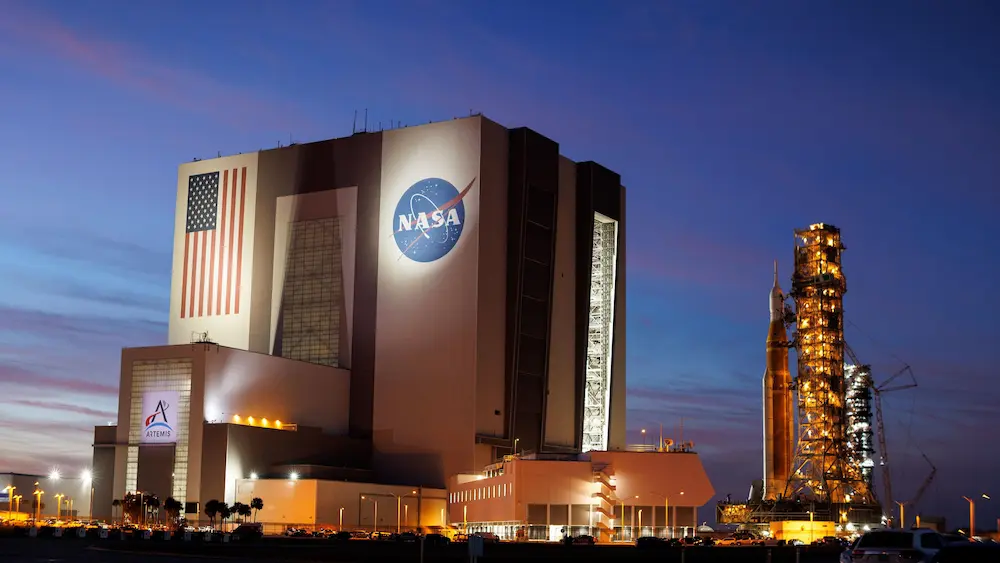
How does NASA go from a bold concept on paper to a spacecraft on the pad? Behind the iconic launches and deep-space discoveries, the National Aeronautics and Space Administration operates as a sprawling national system: strategy is set in Washington, technical work is spread across specialist centres, and funding decisions in Congress ultimately shape what flies, when, and at what scale.
That system is larger and more interconnected than many people realise. NASA is the United States’ civil space programme, with just under 18,000 civil servants and a nationwide network of centres and facilities, while also relying on contractors, universities, international partners and commercial companies. It is explicitly a civilian agency, not a defence organisation, and its budget supports peaceful space exploration, science, aeronautics and technology development.
At the top, NASA Headquarters sets agency-wide direction under the Administrator and broader leadership team. Beneath that sit major mission directorates, each responsible for its own portfolio and funding. According to NASA’s public organisation pages, those include the Science Mission Directorate, the Exploration Systems Development Mission Directorate, the Space Operations Mission Directorate, the Space Technology Mission Directorate and the Aeronautics Research Mission Directorate. In practice, that means one part of NASA manages science goals, another develops exploration systems, another oversees operational space infrastructure, and others push future technologies and aviation research forward.
But Headquarters does not build everything itself. The real machinery of NASA lives across the country, where centres and facilities convert agency priorities into hardware, software, testing and operations. That is where the story becomes especially interesting.

NASA’s centre network reveals how distributed the agency really is. NASA lists major sites including Johnson Space Center, Kennedy Space Center, Goddard Space Flight Center, Marshall Space Flight Center, Langley Research Center, Ames Research Center, Glenn Research Center, Stennis Space Center, Wallops Flight Facility, White Sands Test Facility and others. There is also the Jet Propulsion Laboratory, which NASA identifies as part of its wider centre and facility ecosystem, though it is operated for NASA by the California Institute of Technology as a federally funded research and development centre.
This geography is not administrative clutter; it is how NASA functions. Headquarters decides broad goals and assigns responsibilities through mission directorates, while centres carry out specialised work. Johnson Space Center is closely associated with human spaceflight, Kennedy Space Center with launch processing and public launch access, Goddard Space Flight Center with major science and spacecraft work, and Stennis Space Center with propulsion testing. The result is a workflow in which no single site does everything. Programmes move between planning, design, testing, operations and support across multiple locations and partners.
| NASA element | Role in the system |
|---|---|
| NASA Headquarters | Sets agency strategy, leadership direction and oversight |
| Mission directorates | Manage portfolios in science, exploration, operations, technology and aeronautics |
| Field centres and facilities | Design, build, test, launch and operate programmes and missions |
| Jet Propulsion Laboratory | NASA-affiliated laboratory operated by the California Institute of Technology |
| Contractors, universities, partners | Provide hardware, services, research and mission support |
Science priorities, meanwhile, are not set in a vacuum. For science missions, NASA’s choices are shaped by community guidance such as National Academies decadal surveys, which help rank the biggest questions and the most compelling mission concepts. That does not eliminate politics or budget pressure, but it does anchor scientific ambition in a broader consensus.
If Headquarters sets direction, money determines the practical boundaries. NASA’s annual budget begins with a White House proposal known as the President’s Budget Request. That request starts the appropriations process, but it is not law. Congress then writes and passes legislation to fund the agency, and the President signs it. Only then does NASA have the legal authority to spend.
The numbers show how constrained that system can be. The Planetary Society’s 2026 guide lists NASA at $24.8 billion in 2025, $24.4 billion in 2026 and a proposed $18.8 billion for 2027. NASA represented about 0.35% of U.S. spending in 2025, and the guide places 2026 at 0.36%. Historically, NASA’s budget peaked during Apollo; since the 1970s, it has averaged 0.71% of annual U.S. government spending, and since the 2010s it has generally sat between 0.4% and 0.3%.
That small share matters because every programme competes inside it. Roughly half of NASA’s annual budget generally goes to human spaceflight activities, around 30% to robotic missions and scientific research, with the rest divided among aeronautics, technology development, salaries, facilities and overhead. So when budgets tighten, schedules can slip, scopes can shrink and priorities can be reordered. A mission may still survive, but not in the same form first imagined.
After appropriations, NASA translates top-line funding into internal plans for programmes and centres. This is where bureaucratic language begins to affect real spacecraft: if a line grows, work accelerates; if it falls short, hardware may wait, testing may stretch out, or capabilities may be deferred. The wonder of exploration still depends on spreadsheets.

NASA also no longer builds everything through one traditional model. It still uses conventional contracts, especially for large and technically demanding programmes, but it also works through partnership frameworks including Space Act Agreements and commercial service models. The editorial logic behind this shift is clear enough: NASA can buy a service in some areas instead of owning every piece of the system itself.
That is the idea behind programmes such as Commercial Crew and Commercial Lunar Payload Services, often shortened to CLPS. In those cases, NASA defines needs and pays for services or deliveries, while commercial providers supply the vehicles or landers. It is a notably different approach from older, more vertically managed government programmes, and it has changed how responsibility and risk are distributed.
Even so, NASA does not simply hand off work and hope for the best. Oversight remains central. The agency’s wider structure includes bodies devoted to engineering, safety and independent assessment, including the NASA Engineering and Safety Center and the NASA Safety Center. Programmes move through formal reviews and decision gates, and advisory input also comes through mechanisms such as the NASA Advisory Council. That layered scrutiny can slow momentum, but spaceflight is unforgiving; what looks like bureaucracy from afar is often a hard-earned response to risk.
International cooperation adds another layer. NASA’s public materials repeatedly emphasise work with international and commercial partners, and that is visible in major efforts such as the International Space Station and Artemis-related cooperation with the European Space Agency. In practice, that means NASA is neither a single factory nor a lone explorer. It is a coordinating engine for national capability, political will, industrial capacity and scientific ambition.
Seen that way, NASA becomes even more fascinating. The launch is the visible climax, but the real story begins much earlier: in strategy documents, science roadmaps, congressional negotiations, centre assignments, contract choices and review boards. The rocket rises in minutes. The system that made it possible takes years.
Space AgenciesThe European Space Agency is Europe’s gateway to space: an intergovernmental organisation created in 1975 to develop a shared space programme for peac…
Read more Space Agencies
Becoming an astronaut remains one of the most demanding career paths on Earth, and the basic idea has not changed in the Artemis era: space agencies s…
Read more Space Agencies
Search for “NASA vs SpaceX” and you will quickly run into a false choice. These are not rival versions of the same organisation. They exist for differ…
Read more