 Technology
Most Powerful Rockets Ever Built, Explained
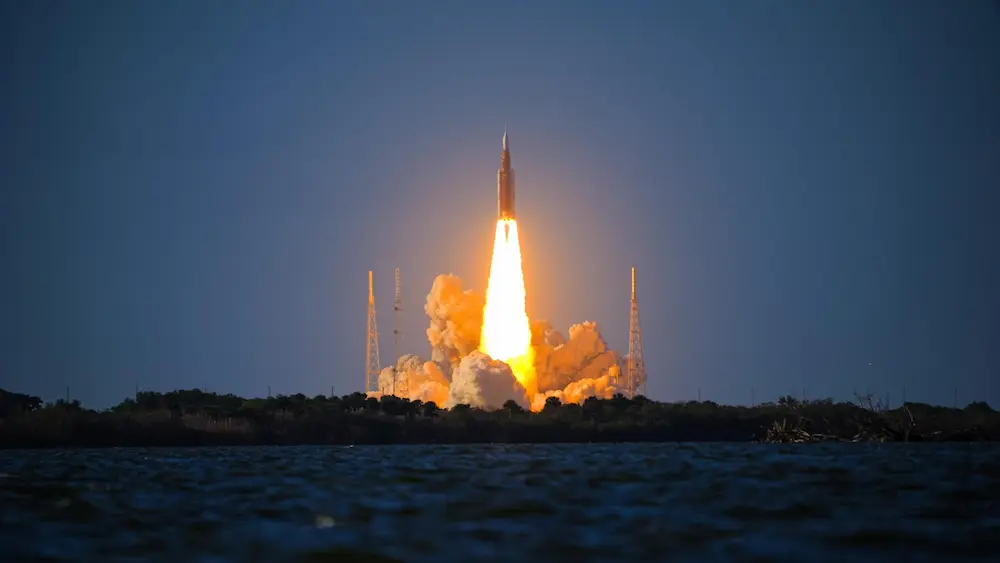
What is the most powerful rocket ever built? The answer depends on what, exactly, you mean by power. If you are talking about raw liftoff thrust — the…
Read more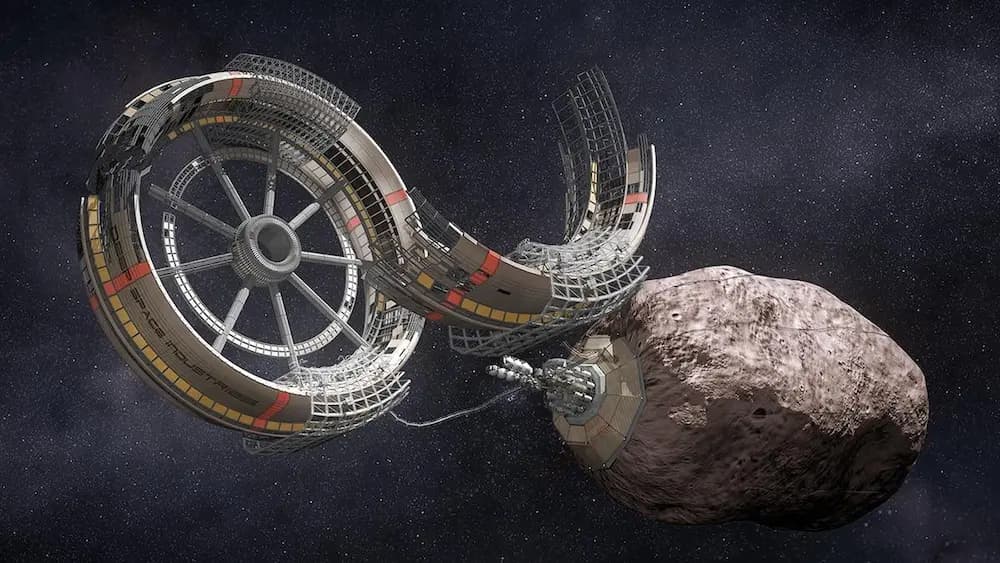
Asteroid mining has long been sold as a cosmic gold rush, with visions of platinum-rich rocks transforming Earth’s economy overnight. The reality emerging in the 2020s is both less flashy and far more credible. If space resources do become commercially useful soon, the first breakthrough is far more likely to look like turning space rocks into gas stations than shipping treasure back to Earth.
That shift matters because we are no longer talking purely in science-fiction terms. NASA and the Japan Aerospace Exploration Agency have spent the past decade bringing asteroid material to Earth, while NASA missions have also revealed how surprisingly complex these small worlds can be. Together, those efforts are replacing speculation with measurements: what asteroids are made of, how loosely they hold together, and why extracting useful material in space may be possible but anything but simple.
Asteroids are rocky, airless leftovers from the solar system’s formation around 4.6 billion years ago. Most orbit between Mars and Jupiter in the main asteroid belt, and they range from giants such as Vesta, about 530 kilometres across, down to objects less than 10 metres wide. Their combined mass is still smaller than Earth’s Moon, which says a lot about how much hope and hype have been projected onto a relatively modest population of worlds.
The most immediate question people ask is straightforward: what is worth mining on an asteroid? The answer depends on asteroid type. Broadly, discussions centre on carbon-rich C-type bodies, stony S-types and metallic M-types. For near-term space industry, carbonaceous asteroids stand out because they may contain water-bearing minerals and organic compounds. That makes them relevant not just to commerce but to one of the deepest scientific questions of all: how the ingredients for habitable worlds were distributed through the young solar system.

Sample-return missions have made that picture much sharper. NASA’s OSIRIS-REx visited asteroid Bennu, and JAXA’s Hayabusa2 collected material from asteroid Ryugu. Both missions targeted carbonaceous asteroids, and their value goes well beyond headline-grabbing sample capsules. They provide direct evidence that such bodies can preserve primitive material from the solar system’s earliest history, including compounds that make them attractive as future sources of water and useful chemistry in space.
That is why the most plausible early business case is in-space use. Water can support life support systems and, when split into hydrogen and oxygen, can become rocket propellant. In other words, a water-rich asteroid might one day help refuel spacecraft in cislunar space, the region between Earth and the Moon. Why launch every kilogram of propellant from Earth if some of it could eventually be sourced off-world?
| Asteroid type | General interest | Near-term mining relevance |
|---|---|---|
| C-type | Carbon-rich, linked to water-bearing minerals and organics | High, especially for water, life support and propellant |
| S-type | Stony asteroids | Potential materials source, but less central to current water-first plans |
| M-type | Metal-rich asteroids | Scientifically compelling, but economically less obvious for Earth return |
Metallic asteroids still fascinate researchers and entrepreneurs alike, and NASA’s Psyche mission is scientifically crucial here because it is studying an M-type asteroid up close. But metal is where economic excitement often outruns practicality. Flooding Earth markets with rare metals could depress prices, undercutting the very business case used to justify the effort. In-space demand, by contrast, could create value without needing to win a race against terrestrial mining and global commodity markets.
Once the conversation moves beyond glossy concept art, asteroid mining becomes an engineering problem of unusual difficulty. First, you have to choose the right target. Accessibility matters enormously, and in mission design that usually means low delta-v: less change in velocity required, less propellant burned and a more realistic mission profile. A rich asteroid that is hard to reach may be less valuable than a more modest one that sits on an easier trajectory.
Then comes prospecting uncertainty. Telescopes can tell us a great deal, but not everything needed for mining decisions. A body may look promising from afar and still prove operationally awkward up close. Bennu and Ryugu have been especially revealing on that point. Far from being neat, solid rocks, such asteroids can be rubble piles: loosely bound accumulations of fragments. That changes everything from landing to drilling.
Anchoring on a world with almost no gravity is not a trivial extension of terrestrial mining; it is practically a different branch of engineering. Push too hard and a spacecraft may rebound. Dig in the wrong way and material may drift rather than collect. Extraction, handling and processing in microgravity all remain open challenges, especially if the goal is not merely gathering samples but operating at industrial scale.
NASA’s Double Asteroid Redirection Test added another lesson. The mission deliberately struck Dimorphos and changed its motion, demonstrating planetary defence techniques, but it also underscored how small-body behaviour can be dynamic and surprising. When a spacecraft interacts with an asteroid, the response depends on structure as much as composition. For mining firms, that uncertainty translates directly into cost and risk.

The modern asteroid-mining story has already had one boom-and-bust phase. Companies such as Planetary Resources and Deep Space Industries captured imagination but struggled to turn ambition into sustainable business. That does not mean the underlying idea was impossible; rather, it exposed a mismatch between technological readiness, available capital and the absence of a mature market in space.
That market is the real pivot. Water only becomes commercially valuable off-world if there are customers in cislunar space: spacecraft, stations, lunar operations or other infrastructure that would rather buy propellant and consumables in space than launch them from Earth. Without that demand, even technically successful extraction remains a solution in search of a buyer.
Agency missions are quietly de-risking the field. OSIRIS-REx and Hayabusa2 have grounded carbonaceous-asteroid ambitions in real samples. NASA’s broader asteroid work, including planetary defence observations and small-body exploration, is improving knowledge of targets and hazards. Psyche, meanwhile, is expanding understanding of metal-rich worlds, even if their commercial role remains less immediate.
The legal environment has also moved from vague to workable, if still incomplete. The Outer Space Treaty remains the baseline framework, establishing that outer space is not subject to national appropriation. At the same time, national laws in some countries and the Artemis Accords have supported the principle that resource utilisation can be carried out. That does not settle every future dispute, but it gives companies and agencies a clearer path than they had during the first asteroid-mining hype wave.
So where does that leave asteroid mining in 2026? Not at the edge of a platinum bonanza, and not as an empty fantasy either. The strongest case now is practical and incremental: learn which asteroids are accessible, understand their messy geology, extract water and materials for use in space, and build demand step by step. It is a less cinematic vision than hauling riches home, perhaps. But as the sample-return era has shown, reality often turns out to be more interesting than the myth.
TechnologyWhat is the most powerful rocket ever built? The answer depends on what, exactly, you mean by power. If you are talking about raw liftoff thrust — the…
Read more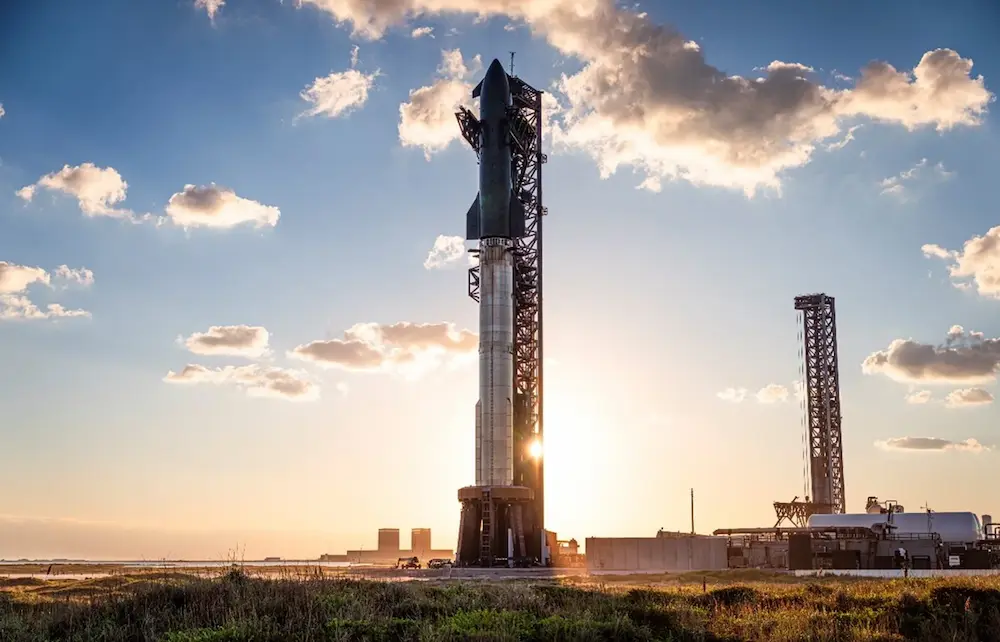 Technology
SpaceX’s Starship has changed the conversation around heavy-lift rockets simply by existing at full scale. On raw numbers, it now stands above the Sat…
Read more